

Why Do Batsmen Dominate Captaincy Roles In Cricket Over Bowlers 2025?

Captaincy: In the world of cricket, the captaincy role is one of the most prestigious and influential positions within a team. Captains are not just responsible for making on-field tactical decisions, but they also carry the weight of the team’s morale, strategy, and overall performance. Interestingly, a pattern has emerged over the years where batsmen, rather than bowlers, dominate the captaincy roles. While there are several exceptions, the trend remains consistent across most cricketing nations. Captaincy: This article delves into the reasons why batsmen are more likely to become captains than bowlers, examining factors such as game dynamics, leadership traits, and tactical demands. 1. Tactical Control And Involvement Captaincy: One of the primary reasons why batsmen are often chosen as captains over bowlers lies in the nature of their role in the game. Batsmen are typically involved in the game for a longer period during a match, especially in Test cricket. A batsman is present at the crease for longer periods, which gives them a more comprehensive understanding of the game’s evolving nature. Average Time Spent On The Field By Batsmen And Bowlers In Test Matches Role Average Time Spent on Field (Minutes) Batsman 180-300+ Bowler 60-120 Captaincy: Batsmen can observe and assess the conditions, the field setup, and the opposition’s strengths and weaknesses in real time. This exposure allows them to make informed decisions, such as when to declare, how to set fields, and when to introduce changes in the batting order. On the other hand, bowlers typically spend a significant portion of the game off the field, especially in formats like Test cricket where batting sessions can last for hours. This reduced time spent in the game limits their ability to gather the same level of insights into the game’s flow. 2. Leadership And Decision-Making Skills Captaincy: Batsmen, particularly those in the top order, often have to demonstrate excellent decision-making skills. The mental fortitude required to stay at the crease for long periods is closely linked to leadership qualities. Captains are often required to make quick decisions under pressure, a trait that can be honed while batting. The ability to read the game, control emotions, and make strategic decisions are key components of effective leadership. Since batsmen spend more time on the field, they tend to develop these skills more thoroughly than bowlers. Leadership Skills By Role Skill Batsman Bowler Decision-Making High Medium Emotional Control High Medium Game Awareness High Medium Strategic Thinking High Low Captaincy: Bowling, by its nature, is often more focused and physically demanding, limiting the bowler’s capacity to engage in broader strategic thinking. A bowler is typically on the field for short bursts, usually focusing intensely on their next delivery or over. This limited involvement in the overall game can sometimes make bowlers less suitable for the role of a captain, which requires a wider view of the game’s development. 3. Player Consistency And Longevity Batsmen often enjoy longer careers than bowlers, as bowling tends to be more physically demanding. A bowler’s career can be interrupted by injuries, especially with the high impact and stress on the body. Fast bowlers, in particular, face risks of injuries to their shoulders, knees, and back, often curtailing their playing time. As a result, selecting a bowler as a captain might present challenges regarding the consistency of leadership over a long period. On the other hand, batsmen are less prone to injuries that would affect their ability to captain over time. Even though batting can be demanding mentally, the physical toll is often less severe than that on bowlers. Batsmen, therefore, have the potential for longer leadership tenures, offering greater stability to the team. Career Longevity And Fitness Impact Role Average Career Length (Years) Injury Impact (Frequency) Batsman 12-18 Low to Medium Bowler 8-14 High (Frequent Injuries) 4. Psychological Traits And Captaincy The psychological traits that are often associated with effective leadership, such as calmness under pressure, the ability to handle complex situations, and the mental strength to bounce back from setbacks, are often cultivated through the experience of batting. Batsmen are regularly required to recover from challenging situations — whether it’s being on the brink of dismissal or facing a hostile bowling attack. A bowler, in contrast, may not face such sustained pressure. While a bowler can experience tense moments during a match, they are often off the field for long stretches, meaning they have less exposure to the full spectrum of pressure that a captain must face. The role of captain requires a wide range of psychological attributes, and batsmen, having spent significant time in high-pressure situations, often display the emotional resilience and decision-making abilities required for captaincy. 5. Cultural And Historical Factors Historically, cricket has been a sport dominated by batsmen, particularly in the traditional contexts of the game. Most cricketing legends who have captained teams — such as Sir Donald Bradman, Sachin Tendulkar, Ricky Ponting, and Virat Kohli — have been batsmen. Over time, this historical trend has shaped perceptions about leadership in cricket. The selection of batsmen as captains has been normalized, and this practice continues today, even as the game evolves. Bowlers who have captained teams, such as Kapil Dev, Courtney Walsh, and Shane Warne, are notable exceptions, but they are fewer in number. Captains In Cricket’s History (Batting vs. Bowling Captains) Type of Captain Number of Captains (Past 50 Years) Batsman 80% Bowler 20% 6. Ability To Influence The Game While bowlers can change the course of a match through critical breakthroughs, batsmen have more control over the game’s tempo. In cricket, particularly in Test matches, a team’s batting order sets the pace of the game. A captain who is a top-order batsman has a direct influence on the score and can dictate how quickly the game progresses or stalls. By declaring innings or choosing when to attack, a batsman-captain can steer the course of a match more comprehensively. Bowlers, while important for key moments, do not usually control the pacing of the game to the same extent. Their role
The Charismatic and Pleasing Personality of Virat Kohli
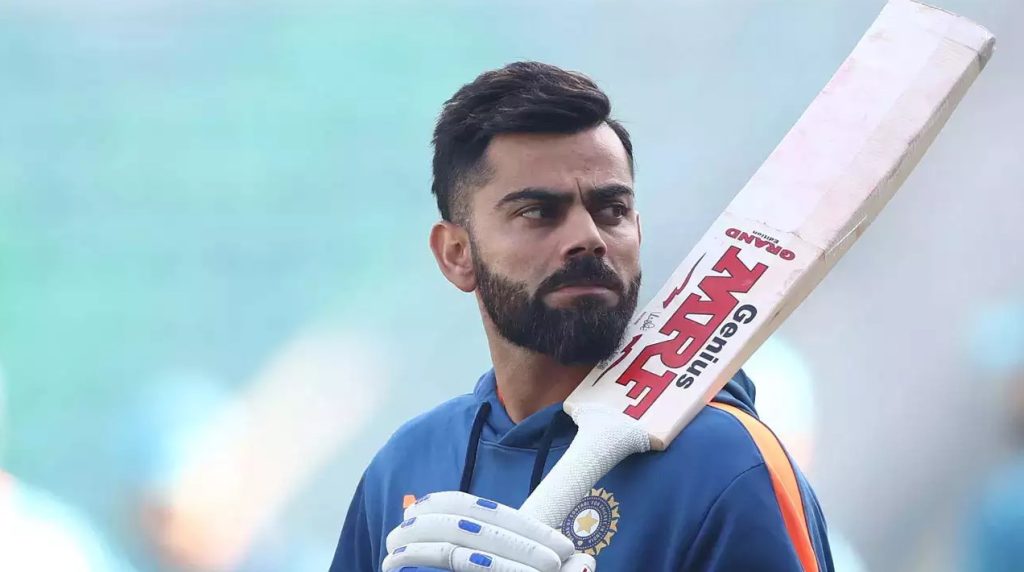
Charismatic : Indian cricket has been graced by numerous legends, each bringing their unique flair and personality to the sport. Among the contemporary cricketers, Virat Kohli stands out not only for his incredible batting skills and leadership qualities but also for his magnetic and pleasing personality. Known for his passion, charisma, and connection with fans, Kohli’s persona transcends the cricket field, making him a global icon. Why Virat Kohli is Known for His Pleasing Personality 1. Dynamic and Passionate Leader Kohli’s leadership is marked by his intense passion and commitment to the game. His ability to lead from the front, combined with his expressive nature, makes him a compelling figure on and off the field. 2. Authentic and Transparent Virat Kohli’s authenticity shines through his candid interactions with the media and fans. Whether it’s celebrating a victory or discussing a tough loss, he remains honest and forthright, which resonates with many. 3. Fashion Icon and Trendsetter Beyond cricket, Kohli is a fashion icon known for his sharp dressing sense and grooming. His style appeals to the younger generation, setting trends in fitness, fashion, and lifestyle. 4. Engaging with Fans Kohli’s connection with fans is unparalleled. Through social media, public appearances, and personal interactions, he actively engages with his supporters, making them feel valued and appreciated. 5. Supportive Teammate While his aggressive nature is evident on the field, Kohli is equally supportive and encouraging towards his teammates, fostering a strong team spirit. A Glimpse into Virat Kohli’s Career and Charisma Category Details Full Name Virat Kohli Nicknames Chiku Birthdate November 5, 1988 Captaincy Tenure 2013–2021 (ODIs and T20Is), 2014–2022 (Tests) Major Achievements – Most Test wins as Indian captain– Fastest to 8,000, 9,000, 10,000 ODI runs– Multiple ICC Awards Notable Qualities Passionate, authentic, stylish, approachable Charismatic Gestures – Regular interaction with fans on social media– Celebrates teammates’ achievements– Transparent and candid interviews Stories Reflecting Kohli’s Pleasing Personality 1. Charity and Social Causes Virat Kohli is actively involved in philanthropy through the Virat Kohli Foundation. He has supported numerous causes, including child welfare, education, and healthcare, demonstrating his compassionate side. 2. Respect for the Opposition Despite his aggressive approach on the field, Kohli has shown immense respect for opponents. A notable instance was when he applauded Steve Smith after the Australian batsman returned from a ban, encouraging Indian fans to appreciate Smith’s talent. 3. Motivating Youngsters Kohli often mentors young players, offering them guidance and support. His positive interactions with emerging talents like Prithvi Shaw and Shubman Gill have been well-documented. Comparison of Virat Kohli with Other Cricketers on Personality Player Name Key Trait Pleasing Personality Aspects Virat Kohli Charismatic and Passionate Engages fans, transparent, supportive Rohit Sharma Calm and Amiable Easygoing, approachable, humorous MS Dhoni Calm and Humble Grounded, composed, respectful Hardik Pandya Energetic and Fun-loving Dynamic, fashionable, lively social presence KL Rahul Stylish and Calm Soft-spoken, fashion-forward, supportive Impact of Virat Kohli’s Personality on Indian Cricket Kohli’s Influence Beyond Cricket Apart from his on-field exploits, Kohli’s influence extends to various spheres: Conclusion Virat Kohli’s journey from a talented youngster to one of the most influential cricketers in the world is a testament to his hard work, dedication, and charismatic personality. His ability to connect with people, whether through his aggressive gameplay, candid interviews, or philanthropic efforts, makes him a truly pleasing personality in Indian cricket. Kohli continues to inspire, entertain, and lead by example, leaving a lasting impact on cricket and beyond. Welcome to E2Bet, here for you to enjoy playing fun and exciting games:
Top 5 Players With Most Run-Outs In International Cricket
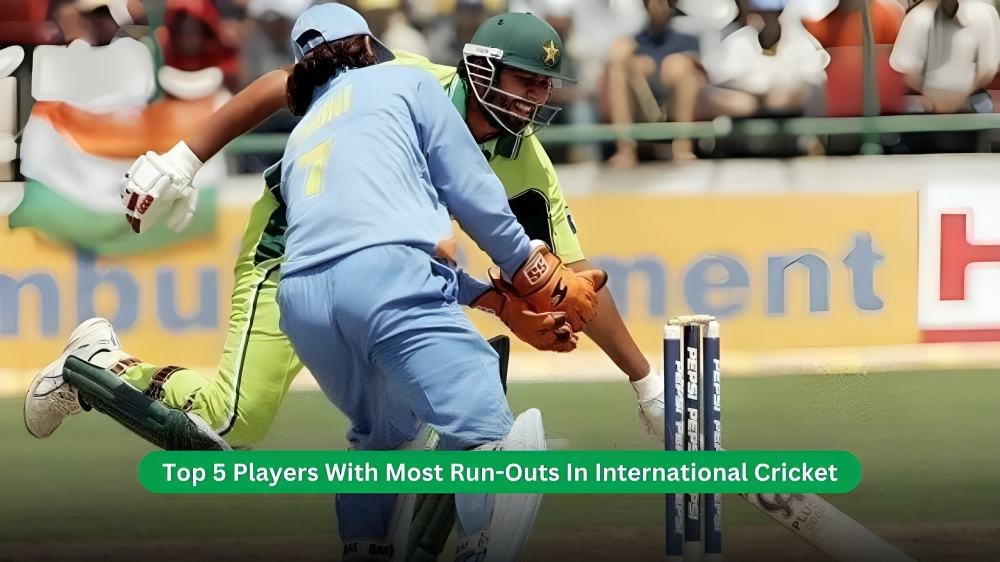
The top 5 players with the most run-outs in international cricket are celebrated for their outstanding fielding and quick reflexes. With exceptional accuracy and agility, they have made significant impacts by saving runs and creating key dismissals, setting new benchmarks for fielding excellence in the game. 5. Steve Waugh (48 run-outs) Steve Waugh, the former Australian captain, executed 48 run-outs in 493 matches. Renowned for his sharp fielding and determination, Waugh, with over 17,000 international runs, showcased exceptional reflexes and dives to save crucial runs. Nearly two decades after his retirement, he remains a symbol of grit and precision in cricket. 4. Tillakaratne Dilshan (57 run-outs) Tillakaratne Dilshan, a Sri Lankan legend, achieved 57 run-outs in his career. Renowned for his attacking batting and off-spin bowling, he was equally remarkable in the field. Following in Jayasuriya’s footsteps as an aggressive opener, Dilshan’s fielding brilliance contributed to many crucial dismissals, showcasing his versatility on the cricket field. 3. Sanath Jayasuriya (63 run-outs) Sanath Jayasuriya, the legendary Sri Lankan all-rounder, executed 63 run-outs in his illustrious 586-match career. Equally effective near the wickets and along the boundary, he showcased exceptional fielding skills. With over 20,000 runs and 400 wickets, Jayasuriya was a cornerstone of Sri Lankan cricket, excelling in all aspects of the game. 2. Jonty Rhodes (68 run-outs) Jonty Rhodes, regarded as one of the greatest fielders in cricket history, achieved 68 run-outs during his career. Renowned for his incredible speed, sharp reflexes, and agility, particularly at point, he revolutionized fielding standards. His iconic run-out of Inzamam-ul-Haq remains unforgettable. Rhodes also contributed significantly with his stunning catches and ability to save crucial runs. 1.Ricky Ponting (86 run-outs) Ricky Ponting, a former Australian captain, holds the record for the most run-outs in international cricket with 86 dismissals. Renowned for his sharp reflexes and precise throws, Ponting was a standout fielder throughout his career. Additionally, he amassed 27,483 international runs in 560 matches, cementing his legacy as one of cricket’s greats. Welcome to E2Bet! Get ready for fun and exciting gaming adventures!
ICC Women’s U19 T20 World Cup 2025: Semi-finalists Revealed

The ICC Women’s U19 T20 World Cup 2025 has exceeded expectations, offering exciting and thrilling matches. Starting on January 18, the tournament is now heading toward its semi-finals, set for January 31 in Kuala Lumpur. The semi-finals will feature the top two teams from each of the Super Six groups. With 16 teams divided into four groups (A, B, C, and D), each containing four teams, the tournament has seen intense competition. The top three teams from each group advanced to the Super Six stage, which was split into two groups: Super Six Group 1 and Super Six Group 2. The top two teams from each group will now face off in the semi-finals. 1. India India has been exceptional in the tournament, winning all four of their matches. They kicked off with a nine-wicket victory over the West Indies, followed by a dominant 10-wicket win against Malaysia. A 60-run triumph over Sri Lanka sealed their perfect record in the group stage. In the Super Six, India defeated Bangladesh by eight wickets and will face Scotland on January 28. With the semi-finals ahead, India will aim to maintain their dominant form against tougher opponents. Vaishnavi Sharma has been India’s standout performer, leading the wicket-takers chart with nine wickets. 2. Australia Australia has once again shown their strength in women’s cricket, winning all four of their matches to reach the semi-finals of the ICC Women’s U19 T20 World Cup 2025. After a comfortable win over Scotland, they earned narrow victories over Bangladesh and Nepal in the group stage. Lucy Hamilton has been the team’s top run-scorer with 61 runs, while Caoimhe Bray has led the bowling attack with seven wickets. 3. England England secured a spot in the semi-finals with three wins from five matches. Unfortunately, two of their games against Ireland and Nigeria were abandoned due to rain. However, they comfortably won their matches against Pakistan, USA, and New Zealand, all while chasing totals. Davina Perrin has been in superb form, scoring 131 runs in the tournament at a strike rate of 146. 4. South Africa South Africa has remained unbeaten in the tournament, winning all four of their games to qualify for the semi-finals. They defeated New Zealand, Samoa, and Nigeria in the group stage and followed that up with a seven-wicket win over Ireland in the Super Six. Their final match before the semi-finals is against the USA on January 28. Off-spinner Kayla Reyneke has been the standout bowler, taking nine wickets in four games with an impressive economy rate of 4.03. E2Bet welcomes you! Play exciting games and enjoy non-stop fun!
Controversial Behavior: Pakistan Cricketers With A Reputation For Bad Manners 2025

Cricket is more than just a sport in Pakistan; it is a national obsession. Over the decades, Pakistani cricketers have captured the imagination of fans with their extraordinary talent and passion for the game. However, alongside their sporting achievements, some players have garnered a reputation for controversial behavior and questionable manners on and off the field. While their skills cannot be denied, their antics have often led to criticism and disciplinary action. This article delves into the controversial behavior of some Pakistan cricketers, offering an objective look at incidents that have marred their otherwise illustrious careers. The Role Of Aggression In Cricket Cricket, despite being labeled as a “gentleman’s game,” often sees players displaying aggression, particularly in high-stakes matches. For some Pakistani cricketers, this aggression has crossed the line, leading to confrontations with opponents, umpires, and even teammates. A combination of pressure, national pride, and personal temperament has often resulted in heated moments. Controversial Players And Incidents Player Name Notable Controversy Outcome Shahid Afridi Ball tampering incident in 2010 Fined and suspended for two T20 matches Shoaib Akhtar Physical altercation with Mohammad Asif in 2007 Sent home from T20 World Cup squad Umar Akmal Repeated disciplinary issues, including a leaked video rant Banned for three years (later reduced) Sarfaraz Ahmed Racial comment during an ODI against South Africa in 2019 Suspended for four matches Javed Miandad On-field spat with Dennis Lillee in 1981 Criticized for unsportsmanlike behavior Waqar Younis Ball tampering allegations in 2000 Fined 50% of match fee Mohammad Amir Spot-fixing scandal in 2010 Five-year ban and imprisonment Shahid Afridi: The Eccentric Star Shahid Afridi, also known as “Boom Boom Afridi,” is one of the most iconic cricketers in Pakistan’s history. However, his career has not been without controversy. In 2010, Afridi was caught on camera biting the ball during an ODI against Australia, an act of blatant ball tampering. Afridi later justified his actions by saying he was trying to “smell the ball.” This incident led to widespread criticism and a two-match suspension. Despite this, Afridi’s charisma and match-winning performances have often overshadowed his controversial moments. Shoaib Akhtar: The Rawalpindi Express Known for his fiery pace and equally fiery temperament, Shoaib Akhtar has been involved in numerous controversies throughout his career. One of the most infamous incidents occurred in 2007 when he was sent home from the inaugural T20 World Cup after physically assaulting teammate Mohammad Asif with a bat. Akhtar’s aggressive personality often clashed with team management, leading to suspensions and fines. Despite his controversies, Akhtar’s record-breaking speed and match-winning spells have secured his place as one of the most exciting fast bowlers in cricket history. Umar Akmal: The Troubled Talent Umar Akmal’s career is a textbook case of wasted potential. The younger Akmal brother burst onto the international scene with immense talent but soon became known more for his off-field antics than his cricketing exploits. From altercations with coaches to unprofessional conduct during training sessions, Umar Akmal’s disciplinary issues have been a constant problem. In 2020, he was banned for failing to report approaches by bookies, a ban that was initially set at three years but later reduced to 12 months. Umar remains a polarizing figure in Pakistani cricket. Sarfaraz Ahmed: Crossing The Line Sarfaraz Ahmed, who led Pakistan to its first ICC Champions Trophy victory in 2017, faced a major backlash in 2019 for making a racial comment directed at South African player Andile Phehlukwayo during an ODI. The comment, caught on the stump microphone, led to Sarfaraz being suspended for four matches and issuing a public apology. While Sarfaraz is generally regarded as a humble and hardworking player, this incident tarnished his reputation to some extent. Factors Contributing To Controversial Behavior Several factors contribute to the controversial behavior of cricketers: Pressure to Perform: The expectations from fans and media can sometimes lead players to act impulsively. Cultural and Temperamental Differences: Aggression is often seen as a means to assert dominance, but it can sometimes be misdirected. Lack of Professional Guidance: Poor management and lack of proper mentorship have also been cited as reasons for some players’ behavior. Media Scrutiny: With the rise of social media, every action is amplified, often blowing minor incidents out of proportion. The Impact Of Controversies On Pakistani Cricket The controversies surrounding Pakistani cricketers have had both positive and negative impacts: Impact Description Negative Damaged the image of Pakistani cricket on the global stage. Positive Raised awareness about the need for better player management and stricter disciplinary measures. Mixed Generated media attention, sometimes drawing more viewers and fans to the sport. Steps Taken To Improve Discipline The Pakistan Cricket Board (PCB) has taken several measures to address behavioral issues among players: Code of Conduct: Implementing strict rules and penalties for misconduct. Education Programs: Conducting workshops on professionalism and ethical behavior. Psychological Support: Offering mental health support to help players manage stress and aggression. Leadership Roles: Appointing experienced players as mentors to guide younger talent. While Pakistani cricketers’ controversial behavior has often been a talking point, it is essential to view these incidents in context. These players are human, prone to mistakes, and operate under immense pressure. Efforts by the PCB to instill discipline and professionalism have shown promise, but there is still work to be done. Ultimately, the goal should be to channel their aggression and passion into performances that inspire fans and uphold the spirit of the game. The legacy of Pakistan cricket is built on a blend of brilliance and chaos. If managed effectively, these moments of controversy can serve as lessons, paving the way for a more professional and respectful generation of cricketers. E2BET: Welcome! Discover Endless Betting Possibilities!
Babar Azam’s Salary: A Detailed Analysis
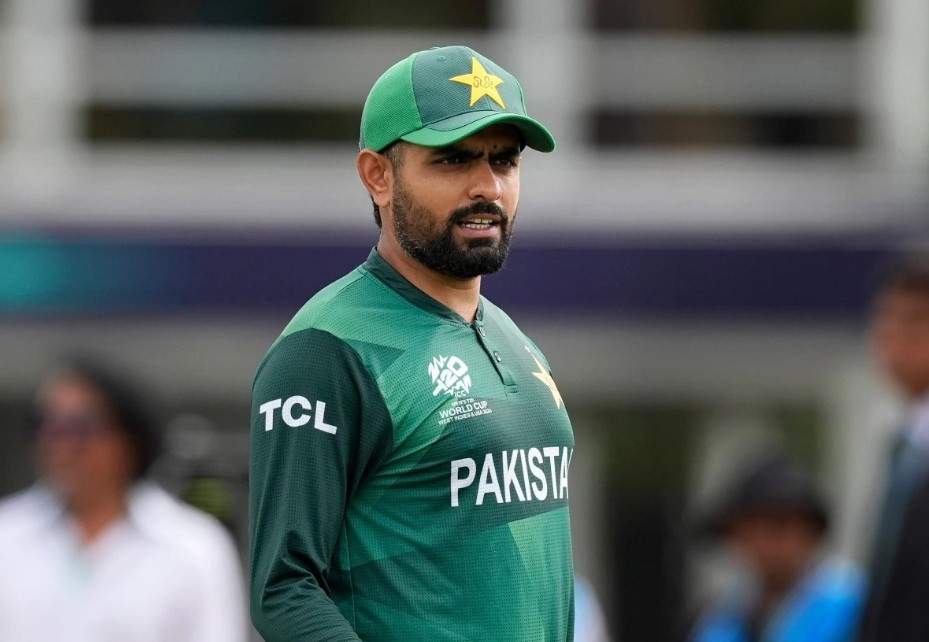
Babar Azam, Pakistan’s cricketing superstar, is not only celebrated for his elegant batting but also for being one of the highest-paid cricketers in the country. As the backbone of Pakistan’s cricket team and a global ambassador for the sport, his earnings include a central contract from the Pakistan Cricket Board (PCB), match fees, endorsements, and other income streams. This article delves into the components of Babar Azam’s salary, highlighting his earnings from cricket and other ventures, and compares it to players worldwide. Components of Babar Azam’s Salary Babar Azam’s salary is divided into several categories: Breakdown of Babar Azam’s Earnings (Estimated) The following table provides an approximate breakdown of Babar Azam’s annual earnings: Category Source Estimated Annual Earnings (PKR) Estimated Annual Earnings (USD) PCB Central Contract Monthly Salary (Category A) 13.2 million ~45,000 Match Fees Tests (8 matches/year) 6.4 million ~22,000 ODIs (15 matches/year) 3.75 million ~13,000 T20Is (20 matches/year) 3.6 million ~12,500 Performance Bonuses Centuries, Wins, Awards 5 million ~17,000 PSL Salary Multan Sultans 40 million ~140,000 Endorsements Pepsi, Oppo, H&S, etc. 60 million ~210,000 Miscellaneous Appearances, Ads, etc. 10 million ~35,000 Total Annual Earnings All Sources 141.95 million ~494,500 Central Contract Details The PCB offers central contracts in three categories: A, B, and C. Babar Azam, being in Category A, receives the highest monthly salary. Here’s a breakdown of the central contract earnings for 2024: Category Monthly Salary (PKR) Annual Salary (PKR) Annual Salary (USD) Category A 1.1 million 13.2 million ~45,000 Category B 750,000 9 million ~31,000 Category C 550,000 6.6 million ~23,000 Babar’s position in Category A reflects his status as a key player and a captain during his tenure. Match Fees (Format-Wise) The PCB pays players match fees for representing Pakistan in international matches. Babar Azam’s match fees for each format are as follows: Format Match Fee per Game (PKR) Estimated Annual Games Total Match Fees (PKR) Total Match Fees (USD) Test 800,000 8 6.4 million ~22,000 ODI 250,000 15 3.75 million ~13,000 T20I 180,000 20 3.6 million ~12,500 Endorsements Babar Azam’s popularity extends beyond the cricket field, making him one of the most sought-after sports personalities in Pakistan. He is endorsed by several major brands: Brand Estimated Annual Deal (PKR) Estimated Annual Deal (USD) Pepsi 25 million ~87,000 Oppo 15 million ~52,000 Head & Shoulders 10 million ~35,000 Miscellaneous Brands 10 million ~35,000 Total 60 million ~210,000 These endorsements significantly contribute to Babar’s total income, surpassing his earnings from cricket in some cases. Comparison with International Cricketers To put Babar Azam’s earnings in perspective, here’s how his salary compares to other prominent cricketers: Player Country Annual Earnings (USD) Remarks Virat Kohli India ~4 million Top Indian cricketer, major endorsements Joe Root England ~1.5 million Central contract and endorsements Kane Williamson New Zealand ~500,000 Smaller cricket market Babar Azam Pakistan ~494,500 Mix of cricket and endorsements While Babar earns significantly less than players from larger markets like India, his income reflects his status as Pakistan’s premier cricketer. Conclusion Babar Azam’s salary, comprising central contracts, match fees, PSL earnings, and endorsements, positions him among the top earners in Pakistan cricket. Despite earning less compared to Indian cricketers due to market dynamics, his value in the global cricketing landscape is undisputed. As his career progresses, Babar’s earnings are expected to grow, solidifying his position as a modern-day cricketing icon. Welcome to E2Bet, here for you to enjoy playing fun and exciting games:
Top Indian Cricket Legends Who Never Captained Team India
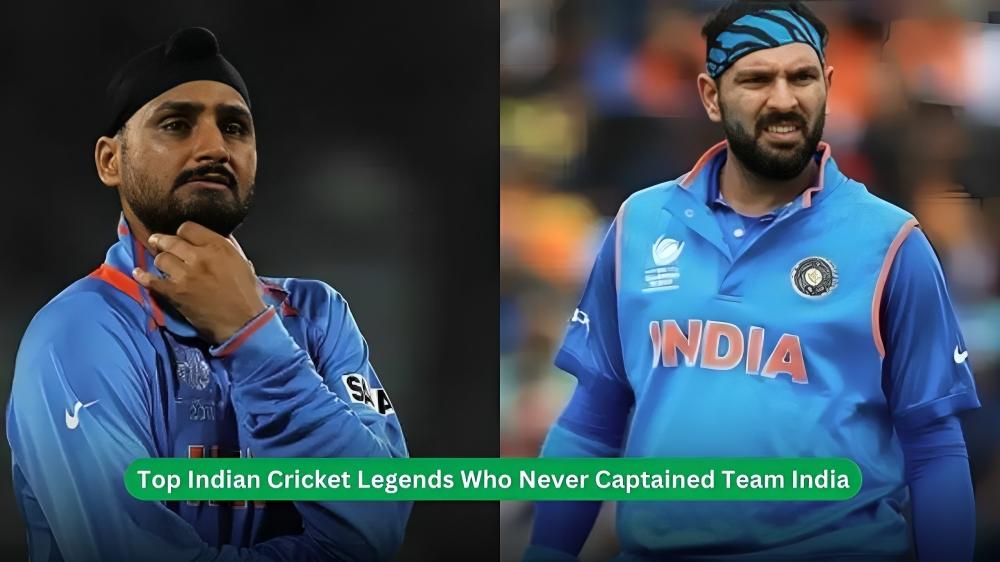
Several top Indian cricket legends, despite their exceptional skills and leadership potential, never captained Team India. These players made significant contributions to Indian cricket, excelling in various roles, but the captaincy was never bestowed upon them, likely due to team dynamics and the presence of other leadership options. Ravichandran Ashwin Ravichandran Ashwin, one of India’s finest spin bowlers with over 500 Test wickets, has been a standout performer, especially in home conditions. Despite his sharp cricketing mind and tactical acumen, Ashwin has never been handed the captaincy, continuing to be a key bowler throughout his career. Player Mat Wickets Avg. Tests 96 534 27.20 ODIs 113 155 33.76 T20Is 65 76 23.12 Harbhajan Singh Harbhajan Singh, known for his aggressive spin and fiery temperament, was a match-winner for India, with his iconic hat-trick against Australia in the 2001 Test series. Despite playing 365 matches and leading Mumbai Indians to IPL success, Harbhajan never captained India, likely due to his aggressive nature and the presence of other leaders. Player Mat Wickets Avg. Tests 103 417 32.46 ODIs 236 269 33.35 T20Is 28 25 25.32 Zaheer Khan Zaheer Khan, with 597 wickets in 303 matches, was the backbone of India’s fast bowling for over a decade. Renowned for his swing and cricketing intelligence, he played a pivotal role in India’s overseas success. Despite his leadership potential, Zaheer was never made captain, as selectors focused on his primary role as a bowler. Player Mat Wickets Avg. Tests 92 311 32.94 ODIs 200 282 29.43 T20Is 17 17 26.25 Yuvraj Singh Yuvraj Singh, known for his explosive batting and key breakthroughs with the ball, became a legend through his performances in the 2007 T20 World Cup and the 2011 ODI World Cup. Despite playing 399 international matches and serving as vice-captain, Yuvraj never captained India, surprising many fans due to his leadership potential. Player Mat Runs Avg. Tests 40 1900 33.92 ODIs 304 8701 36.55 T20Is 58 1177 28.02 VVS Laxman VVS Laxman, known for his elegant wrist work and calm demeanor, was a reliable pillar of India’s middle order. Despite playing over 100 Tests and delivering unforgettable performances like his 281 against Australia in 2001, Laxman never captained India, likely due to his quiet nature and the presence of other leadership options. Player Mat Runs Avg. Tests 134 8781 45.97 ODIs 86 2338 30.76 Welcome to E2Bet! Get ready for fun and exciting gaming adventures!
Top 5 Batsmen with Most Runs in Consecutive T20Is Without Dismissal
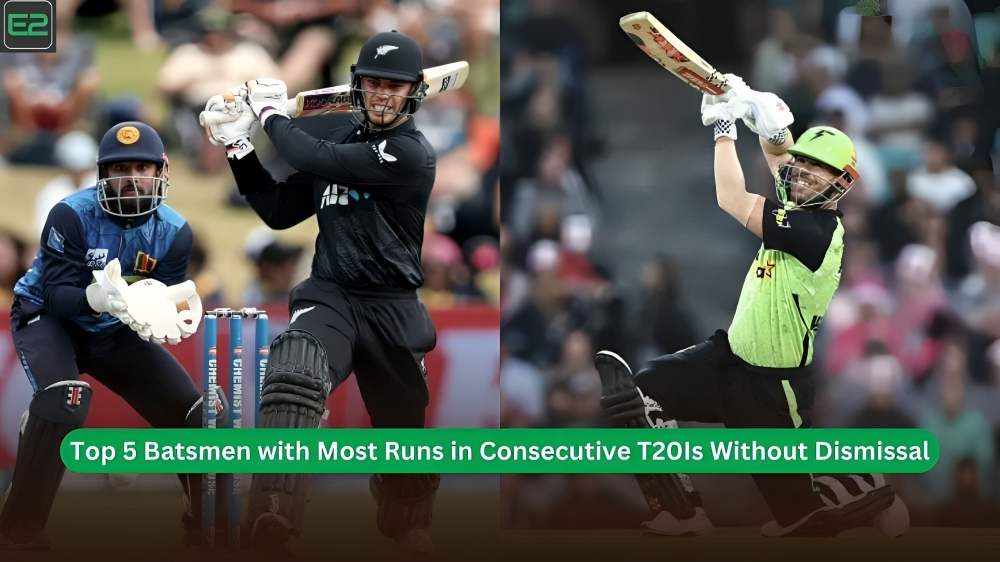
Consistency in T20 cricket is a major challenge for batsmen. While the format encourages aggressive stroke play, it also increases the risk of frequent dismissals, especially when compared to the more traditional formats of Test and ODI cricket. In Tests and ODIs, a batsman’s average is often the key measure of success. However, in T20s, the strike rate becomes the defining factor in evaluating a player’s impact. 5. David Warner (AUS) – 239 runs One of the greatest T20I batsmen, David Warner scored 239 runs between his two dismissals in 2019. His excellent form included a century and two half-centuries. Warner started his excellent run against Sri Lanka with a hundred (100) in Adelaide followed by a couple of half centuries (60) and (57*) in Brisbane and Melbourne respectively. He then posted a unbeaten two runs against Pakistan in Sydney before finally getting bowled on 20 runs in Canberra by Mohammad Amir. He retired from T20I cricket after Australia’s exit from the ICC Men’s T20 World Cup 2024. 4. Shreyas Iyer (IND) – 240 runs Indian middle-order batter Shreyas Iyer achieved history when he scored 240 runs between his dismissals in 2022. Iyer starred for India in their three-match T20I series against Sri Lanka in 2022 by posting the scores of 57, 74 and 73* in Lucknow and Dharamshala (common venue for second and third T20I). His run came to an end in Delhi against South Africa when he was bowled for 36 runs. 3. Aaron Finch (AUS) – 240 runs Former Australia captain Aaron Finch is one of the greatest Australian batsmen in T20I cricket history. Finch scored 240 runs without getting dismissed in two T20Is in a tri-series against Zimbabwe and Pakistan in 2018. Finch scored an unbeaten 68 against Pakistan in Harare in 2018, followed by an impressive unbeaten 172 against Zimbabwe at the same venue just a day later. His brilliance helped Australia seal their berth in the finals of the tri series with a 100-run win. 2. Mark Chapman (NZ) – 271 runs New Zealand all-rounder Mark Chapman is next on the list with 271 runs between his two dismissals in T20I cricket. He registered this remarkable record by racking up impressive unbeaten knocks of 65 and 16 runs in Lahore followed by another half century (71) and century (104) in Rawalpindi against Pakistan in 2023. The southpaw was finally dismissed on 15 runs against UAE in Dubai. 1. Tilak Varma (IND) – 318 runs Among cricketers from test playing nations, India’s left-handed batter Tilak Varma holds the record of making most runs in T20I cricket between two dismissals. Verma scored unbeaten knocks of 107 and 120 against South Africa in Centurion and Johannesburg respectively in 2024 before adding an unbeaten 19 in Kolkata during the first T20I against England. His 72 not out in Chennai took his tally to 318 runs since his last dismissal. Welcome to E2Bet! Get ready for fun and exciting gaming adventures!
Ben Stokes: The Greatest Clutch Player Of His Generation 2025?

Ben Stokes has redefined what it means to be a clutch player in modern cricket. Known for his extraordinary performances under pressure, he has delivered some of the most iconic moments in cricketing history. This article evaluates whether Ben Stokes deserves the title of the greatest clutch player of his generation, analyzing his performances, mental resilience, and statistical contributions in high-pressure situations. Defining A Clutch Player Ben Stokes: In sports, a “clutch player” is someone who consistently delivers exceptional performances when it matters the most—during high-stakes moments, under intense pressure. These players often thrive when their team is in dire need of a match-winning contribution. Key attributes of a clutch player include: Mental Resilience: Staying calm under pressure. Versatility: Excelling in multiple roles as per the team’s needs. Consistency: Delivering high-impact performances regularly. Decisive Actions: Turning games around in crunch moments. Ben Stokes’ Iconic Performances Ben Stokes: Ben Stokes’ career is filled with standout performances that exemplify his ability to deliver when the stakes are highest. Below, we highlight a few of his most remarkable moments: Match Format Performance Impact 2019 World Cup Final (vs. New Zealand) ODI 84* (98) and 8 runs in Super Over Guided England to their first-ever World Cup win in an intense final. 2019 Headingley Test (vs. Australia) Test 135* (219) One of the greatest Test innings; saved England from near defeat. 2022 T20 World Cup Final (vs. Pakistan) T20I 52* (49) Anchored the chase to secure England’s second T20 World Cup. 2016 T20 World Cup (vs. West Indies) T20I 4 consecutive sixes conceded in the final over A learning moment that fueled his rise as a clutch player later on. Statistical Analysis: Performance Under Pressure Ben Stokes: While cricket is as much about moments as it is about numbers, Stokes’ statistics in pressure situations further reinforce his reputation as a clutch player. Test Cricket In Tests, Stokes has often turned the tide in England’s favor with both bat and ball. Below is a table showcasing his performance in successful fourth-innings chases: Match Runs Scored Balls Faced Result Opposition Headingley, 2019 135* 219 England won by 1 wicket Australia Cape Town, 2020 72 47 England won by 189 runs South Africa Colombo, 2018 62 99 England won by 57 runs Sri Lanka ODI Cricket Ben Stokes: Stokes has been pivotal in England’s rise in ODI cricket, particularly during the 2019 World Cup. His performances in high-pressure matches are reflected in his stats: Match Context Innings Runs Strike Rate Result 2019 WC Final vs. NZ 84* 85.71 England won (Super Over) 2019 WC Semi-final vs. Aus 57 109.43 England won by 8 wickets 2021 vs. India (Chennai) 99 127.27 England lost narrowly T20 Cricket Ben Stokes: Despite being remembered for conceding four consecutive sixes in the 2016 T20 World Cup final, Stokes has shown resilience and a marked improvement in high-pressure T20 matches: Tournament Runs Scored Wickets Taken Impact 2022 T20 WC Final 52* – Match-winning knock in the final 2020 IPL (vs. MI) 107* – Guided Rajasthan Royals to a critical win 2022 T20 WC Semi-Final 38* 1 wicket Steady chase in a tricky situation Mental Resilience: Learning From Setbacks Ben Stokes: Stokes’ career is as much about his triumphs as it is about his ability to recover from setbacks. His low point came in the 2016 T20 World Cup final when Carlos Brathwaite hit him for four consecutive sixes in the last over, snatching the trophy away from England. For many players, such a moment could be career-defining in a negative sense. However, for Stokes, it became a turning point. Following this, he worked on his skills, improved his death bowling, and refined his approach under pressure. The mental fortitude displayed by Stokes after the 2016 incident demonstrates why he is regarded as one of the toughest players mentally. Leadership In Pressure Situations Stokes’ impact extends beyond his personal performances; his leadership qualities under pressure have been equally noteworthy. As England’s Test captain, Stokes has revitalized the team with a bold and aggressive approach, particularly during the “Bazball” era alongside coach Brendon McCullum. Some key examples of his captaincy under pressure include: 2022 England vs. New Zealand Test Series: Stokes’ proactive declarations and attacking field placements led to a series win. Ashes 2023: Despite losing the series, Stokes’ tactical brilliance and inspiring performances, including his 155 in the second Test at Lord’s, showcased his ability to lead by example. Comparing Stokes With Other Clutch Players To evaluate whether Stokes is the greatest clutch player of his generation, it’s essential to compare him with other modern greats: Player Format Notable Clutch Performance Comparison with Stokes Virat Kohli ODI/T20I 82* vs. Pakistan, T20 WC 2022 Kohli excels in chases but lacks Stokes’ all-round impact. MS Dhoni ODI/T20I 91* in 2011 WC Final Dhoni’s calmness rivals Stokes’ aggression. Steve Smith Test/ODI Ashes 2019 (774 runs in 4 Tests) Smith dominates Tests but doesn’t match Stokes’ versatility. Shakib Al Hasan All Consistent all-round performances in ICC events Shakib is consistent but hasn’t delivered iconic moments like Stokes. Is Stokes The Greatest Clutch Player? Ben Stokes has carved out a unique niche in cricket history. His ability to deliver in high-stakes moments, both as a batter and bowler, combined with his mental toughness and leadership, sets him apart. While comparisons with contemporaries like Virat Kohli and MS Dhoni are inevitable, Stokes’ versatility as an all-rounder gives him an edge. Whether it’s smashing sixes at Headingley, guiding England to a World Cup win, or anchoring a tricky chase, Stokes has consistently proven himself as a player who thrives under pressure. His journey from heartbreak in the 2016 T20 World Cup to redemption in subsequent years makes him not just a great clutch player but arguably the greatest of his generation. E2BET: Welcome! Discover Endless Betting Possibilities!
Auction: How Many Players Can a Team Buy in an Auction During IPL
Auction : The Indian Premier League (IPL) auction is one of the most anticipated events in the cricketing calendar. It is here that franchises build their squads by bidding on a mix of Indian and international players. Over the years, the rules governing the number of players a team can buy during an auction have evolved. In this article, we explore these rules, their historical changes, and the strategy behind team compositions. We also provide detailed tables for reference. Understanding Squad Composition Rules Every IPL team must adhere to specific guidelines when forming their squads. The Board of Control for Cricket in India (BCCI) has set minimum and maximum limits for squad sizes to ensure a balanced and competitive tournament. These rules include: These limits are in place to ensure that teams maintain a core group of Indian players while having the flexibility to include overseas talent. Historical Changes in Auction Rules Since the inaugural IPL season in 2008, the auction rules have undergone several modifications. Below is a timeline of significant changes: Year Rule Change Impact 2008 Initial auction allowed teams to buy up to 25 players Ensured teams had enough players for a balanced XI and substitutes 2011 Introduction of retention rules; teams could retain up to 4 players Reduced the number of players available in the auction 2014 Retention limit increased to 5 players; Right to Match (RTM) introduced Allowed teams to secure key players while still participating in the auction 2018 Mega auction with retention of 3 players and 2 RTM cards Created a level playing field for franchises 2022 Addition of two new teams; maximum squad size retained at 25 Increased competition for players in the auction Maximum Players Bought in a Single Auction Over the years, teams have used their auction budget to buy several players, especially during mega auctions where almost the entire squad is built from scratch. Below is a table summarizing the maximum players bought by each team in major auctions: Year Team Number of Players Bought Type of Auction 2011 Pune Warriors India 20 Mega Auction 2018 Rajasthan Royals 22 Mega Auction 2022 Lucknow Super Giants 21 Mega Auction (New Team) 2022 Gujarat Titans 20 Mega Auction (New Team) Teams like Rajasthan Royals and Lucknow Super Giants have maximized their squad-building opportunities during auctions, often targeting young Indian players and uncapped talent. Team Strategy in Auctions The number of players a team can buy is heavily influenced by: Year Auction Purse (INR) 2008 20 crore 2011 50 crore 2014 60 crore 2018 80 crore 2022 90 crore Summary of Squad Rules and Player Purchases Category Details Maximum Squad Size 25 players Minimum Squad Size 18 players Maximum Overseas Players 8 players Retention Rules Varies by season (3-5 players allowed) Auction Purse (2022) INR 90 crore Conclusion The IPL auction is a dynamic and strategic process that goes beyond just buying the most expensive players. Teams must carefully plan their squad composition while adhering to the rules. Over the years, the maximum number of players a team can buy has remained consistent, but the strategies and rules around retention, Right to Match, and auction budgets have added layers of complexity. As the league continues to grow, the auction will remain a key aspect of team building, offering franchises the opportunity to unearth new talent and craft competitive squads. The balance between retaining core players and scouting for fresh talent ensures that the IPL remains one of the most exciting cricket tournaments in the world. Welcome to E2Bet, here for you to enjoy playing fun and exciting games: