

Who Will Step In For The Injured Allah Ghazanfar In Mumbai Indians’ IPL 2025 Squad?
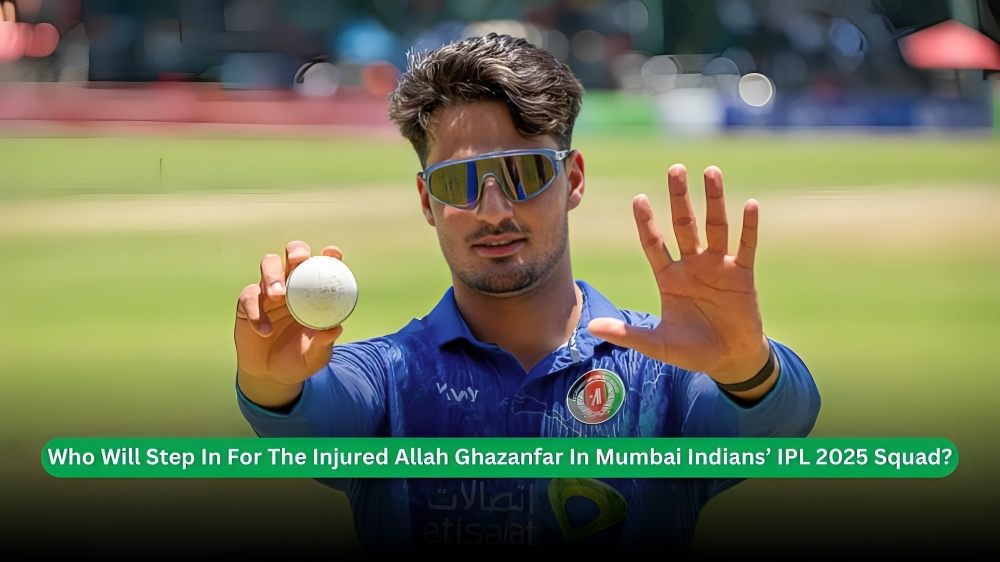
Mumbai Indians have announced Mujeeb Ur Rahman as a replacement for the injured Allah Ghazanfar for IPL 2025. Ghazanfar, a promising 18-year-old spinner, was acquired for ₹4.80 crore in the auction but has been ruled out due to a fracture in his L4 vertebra, sustained during Afghanistan’s tour of Zimbabwe. This injury also sidelines him for the upcoming ICC Champions Trophy. Mujeeb’s inclusion reshapes the team’s bowling lineup, showcasing Mumbai’s ability to make swift, strategic decisions in response to challenges. Mujeeb Ur Rahman Mujeeb Ur Rahman, a talented mystery spinner from Afghanistan, made his IPL debut in 2018 with Punjab Kings, quickly becoming a standout performer. His rise in T20 cricket has been remarkable, making history as the youngest player to take an IPL wicket. Known for his deceptive variations, Mujeeb has evolved into one of Afghanistan’s most reliable spinners. His adaptability in different playing conditions, coupled with consistent performances in T20 leagues worldwide, has made him a valuable asset in the shortest format, and a sought-after player for teams looking to strengthen their spin department. Here’s the IPL performance in a table format: IPL Performance Highlights Total IPL Matches 19 Total IPL Wickets 19 Best Bowling Figures 3/27 Debut Season (2018) 14 wickets in 11 matches at an economy of 6.99 Mujeeb’s impact goes beyond statistics, creating pressure and forcing batsmen into mistakes, making him a tactical asset. T20 Cricket Credentials Here’s a summary of Mujeeb Ur Rahman’s T20 career credentials: T20 Career Highlights Total T20 Matches 256 Total T20 Wickets 275 Bowling Average 23.67 Economy Rate 6.75 Powerplay Wickets (1-6 overs) 107 Powerplay Economy Rate 6.69 Mujeeb’s exceptional skill in early overs and versatility across various conditions has made him a sought-after bowler in global T20 leagues. International T20 Credentials Here’s the information in table format: T20I Matches 49 appearances representing Afghanistan Wickets 63 scalps across various conditions and opponents Average 17.14, highlighting his consistency Economy Rate 6.33 (sixth-best among full-member team bowlers), demonstrating his ability to control runs In the context of Afghanistan cricket, Mujeeb’s achievements stand out prominently. Among his compatriots, only three players have surpassed his wicket-taking record in T20Is: the legendary Rashid Khan with 159 wickets, the experienced Mohammad Nabi with 97 wickets, and the emerging Naveen-ul-Haq with 67 wickets. This places him in elite company within Afghanistan’s cricketing hierarchy. Welcome to E2Bet! Get ready for fun and exciting gaming adventures!
Why MS Dhoni Was The Most Successful Captain Of The Indian National Cricket Team 2025
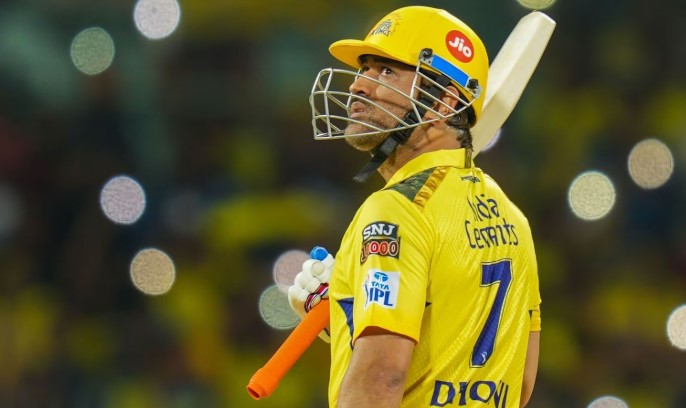
MS Dhoni: Mahendra Singh Dhoni, commonly known as MS Dhoni, is widely regarded as one of the most successful and influential captains in the history of Indian cricket. His leadership, tactical brilliance, calm demeanor under pressure, and ability to inspire his players have made him a legend of the game. As the captain of the Indian national cricket team, MS Dhoni took India to numerous historic milestones, establishing himself as the most successful and revered captain in Indian cricket history. In this article, we will explore why MS Dhoni became the most successful captain of the Indian national cricket team. From his leadership qualities to his accomplishments on the field, we will analyze the factors that made Dhoni the unparalleled captain he is remembered as today. The Birth Of A New Era MS Dhoni became the captain of the Indian cricket team in 2007, following the surprise resignation of Rahul Dravid after India’s early exit from the 2007 ICC Cricket World Cup. While Dhoni was already an established player, his appointment as the captain was a bold choice by the Board of Control for Cricket in India (BCCI). Few could have predicted the monumental success that would follow under his leadership. Initially seen as an underdog, Dhoni quickly transformed the Indian team into a force to be reckoned with. His calmness, quick decision-making, and unconventional leadership approach set him apart from other captains of his time. Key Factors Behind MS Dhoni’s Success As A Captain Several factors contributed to MS Dhoni’s success as a captain. His unique blend of qualities helped him lead the team to great heights. Let’s take a closer look at some of these attributes: 1. Tactical Genius And Decision-Making One of the most defining aspects of Dhoni’s captaincy was his tactical brilliance. His decision-making on the field, whether it was in setting the field, choosing bowlers, or making mid-match adjustments, was often spot on. MS Dhoni had an innate ability to read the game and make the right calls at crucial moments. His handling of key players, including rotating bowlers, setting aggressive field placements, and managing match situations, showcased his deep understanding of the game. The famous example of his tactical acumen came during the 2011 ICC Cricket World Cup, where he promoted himself up the batting order in the final, ahead of established batsmen like Yuvraj Singh and Suresh Raina. This brave decision paid off as Dhoni led India to victory with an iconic match-winning knock of 91* runs. Tactical Decision Event Outcome Promoting himself to number 5 in the final 2011 ICC World Cup Final Dhoni’s knock guided India to a historic World Cup win Bowling Ishant Sharma in the 2007 T20 WC Final ICC 2007 T20 World Cup Final Ishant’s successful over helped India win the inaugural World Cup 2. Ability To Stay Calm Under Pressure Perhaps the most significant quality of MS Dhoni as a captain was his ability to remain calm under pressure. Whether in tight situations during a match or handling media scrutiny, Dhoni always maintained his composure. His ability to think clearly and make decisions during high-pressure moments helped India win several close games and tournaments. His calmness in the 2007 T20 World Cup final against Pakistan is one of the prime examples of his leadership. Despite the pressure of defending a small total in a tense final, Dhoni’s composed demeanor and sharp tactical thinking guided India to victory. 3. Trust In Players And Backing Young Talent MS Dhoni had an exceptional ability to back his players, particularly young talent. He was never afraid to give youngsters a chance in the playing XI, and his faith in their abilities allowed many players to flourish. For example, Dhoni was instrumental in the rise of players like Suresh Raina, Ravindra Jadeja, and Shikhar Dhawan. By backing these players, Dhoni not only gave them confidence but also created a team dynamic that encouraged growth and team cohesion. His leadership style wasn’t about controlling every aspect of the game; it was about letting players take responsibility and backing them when needed. Young Talent Backed by Dhoni Contribution to Indian Cricket Team Suresh Raina Key player in middle-order, excelled in all formats Ravindra Jadeja Developed into one of India’s leading all-rounders Shikhar Dhawan Became India’s leading opening batsman in limited overs 4. Understanding Of Pressure Situations Dhoni’s personal experience as a player in pressure-filled situations helped him lead the Indian team with maturity. As a wicketkeeper-batsman, he had been involved in many tense situations throughout his career, and this gave him a deep understanding of what players go through during crucial moments. His ability to guide his team through high-pressure games, whether in the Indian Premier League (IPL) or international cricket, made him stand out. His role in India’s 2007 T20 World Cup win, 2011 World Cup victory, and the 2013 Champions Trophy win showed his ability to lead his team to triumph in tournaments where pressure often overwhelmed other teams. 5. Innovative Captaincy And Risk-Taking One of Dhoni’s most unique qualities as a captain was his willingness to take risks. He wasn’t afraid to make bold decisions, whether it was promoting himself in the batting order or choosing an unconventional strategy. Dhoni’s aggressive approach in certain situations often yielded great results for the team. For instance, in the 2013 ICC Champions Trophy final against England, Dhoni’s decision to bowl Ravindra Jadeja in the final overs, despite his less prominent role, turned out to be a match-winning move. This kind of risk-taking ability set him apart from other captains who preferred a more conservative approach. 6. Success In Multiple Formats MS Dhoni’s success was not limited to one format of the game. He led India to victories in all three major formats: Test cricket, One-Day Internationals (ODIs), and T20s. Under his leadership, India became the number one team in Test cricket for the first time in 2009, a significant achievement in Indian cricket. India also became the first team to hold all three
2 Reasons Why RCB Choosing Rajat Patidar Over Virat Kohli as Captain Was a Masterstroke
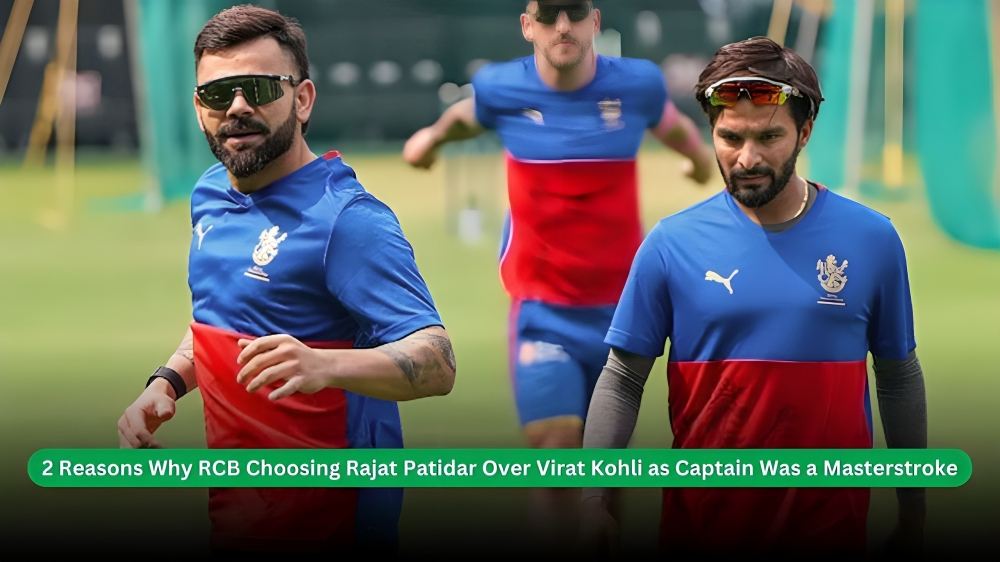
RCB’s decision to appoint Rajat Patidar over Virat Kohli as captain was a strategic move for the future. Patidar’s proven leadership in domestic cricket and ability to balance captaincy with batting make him ideal. Meanwhile, Kohli’s return to leadership would have been a step back, affecting team evolution and long-term success. 1. His batting form as captain has been exceptional One of the key reasons behind RCB’s decision to appoint Rajat Patidar as captain is his ability to thrive under pressure. Unlike many players who struggle to balance leadership and performance, Patidar has proven he can lead from the front without compromising his batting form. This was evident in the Syed Mushtaq Ali Trophy (SMAT) 2024-25, where he captained Madhya Pradesh and scored 428 runs in 10 matches at a striking 186.08. His five fifties and match-winning contributions guided Madhya Pradesh to the finals, highlighting his ability to handle both captaincy and batting responsibilities seamlessly. RCB sees this leadership-performance balance as a crucial asset in their quest for their maiden IPL title. 2. The future shines so brightly RCB’s decision to appoint Rajat Patidar as captain over Virat Kohli is a forward-thinking move, prioritizing future success over past nostalgia. Kohli stepped down from captaincy in 2021, choosing to focus on his batting, as leadership pressures had affected his performances. Bringing him back would have been a regression rather than progress. Patidar, on the other hand, has demonstrated his leadership credentials in domestic cricket, particularly in the 2024-25 Syed Mushtaq Ali Trophy, where he led Madhya Pradesh to the final while excelling with the bat. His ability to balance leadership and performance makes him an ideal choice. RCB’s decision reflects their vision of building a sustainable team culture with emerging leaders. It’s not just about winning now but preparing for long-term dominance. By entrusting Patidar, RCB is signaling a fresh approach, focusing on adaptability, youth, and innovation, ensuring a seamless transition beyond Kohli’s era. Welcome to E2Bet! Get ready for fun and exciting gaming adventures!
What Is The Highest Score Ever Recorded At A Cricket Stadium 2025?
Highest Score: Cricket is one of the most exciting sports in the world, with fans eagerly awaiting incredible individual performances. While the game is a team sport, personal milestones like the highest individual score at a cricket stadium create unforgettable moments in history. The record for the highest score at a cricket stadium is a testament to a player’s sheer skill, concentration, and ability to dominate the opposition, making it one of the most celebrated achievements in the sport. In this article, we explore the highest score ever recorded at a cricket stadium across different formats, the players behind these achievements, and the significance of these records. Understanding The Highest Score In A Cricket Stadium When we talk about the highest score recorded at a cricket stadium, we refer to the individual batting record for the most runs scored in a single innings at a particular venue, regardless of the format (Test, ODI, or T20). These innings are remarkable not just because of the sheer volume of runs but also due to the difficulty of maintaining focus and consistency over long periods. The Highest Score Ever Recorded In Test Cricket In Test cricket, where matches are played over five days, the challenge for batsmen is to not only build a long innings but to do so against the best bowlers in the world. The highest score ever recorded in a Test match was by Brian Lara of the West Indies. Brian Lara’s 400 At The Antigua Recreation Ground (2004)* On April 10, 2004, Brian Lara made history by scoring an astonishing 400 not out against England at the Antigua Recreation Ground in St John’s, Antigua. This remains the highest individual score in Test cricket. Lara’s innings was a perfect exhibition of technique and endurance, where he faced 582 balls and hit 43 fours and 4 sixes. This achievement is remarkable not only for the score itself but also because it came in a format that is known for its demanding nature. To score such an innings over a period of two days against high-quality opposition was nothing short of extraordinary. Rank Player Name Score Opponent Venue Date 1 Brian Lara 400* England Antigua Recreation Ground April 10, 2004 2 Matthew Hayden 380 Zimbabwe WACA, Perth, Australia October 2003 3 Michael Clarke 329 India Sydney Cricket Ground January 2012 4 Hanif Mohammad 337 West Indies Eden Gardens, Kolkata January 1959 5 Gary Sobers 365* Pakistan The Oval, London August 1958 Significance Of Brian Lara’s Record Brian Lara’s 400* remains an unparalleled achievement in Test cricket. Not only did it take a great deal of stamina to stay at the crease for so long, but Lara’s ability to overcome the pressure of such a high run-chase, along with his strategic shot selection, made this innings iconic. The record is unlikely to be surpassed any time soon, considering the changing nature of modern cricket and the increasing focus on shorter formats. The Highest Score Ever Recorded In One Day International (ODI) Cricket In One Day Internationals, where each team is limited to 50 overs, batsmen typically aim for quick accumulation of runs while also considering their partnerships. The highest score in an ODI innings belongs to Rohit Sharma of India. Rohit Sharma’s 264 At Eden Gardens (2014) On November 13, 2014, during an ODI against Sri Lanka at the Eden Gardens in Kolkata, Rohit Sharma set a world record by scoring 264 runs. This achievement was historic because he became the first player to score more than 250 runs in an ODI match. Rohit’s innings was built on perfect timing and placement, with 33 fours and 9 sixes. His ability to accelerate at the right moments and his focus over the long haul helped India post an impressive total of 404/5. Rank Player Name Score Opponent Venue Date 1 Rohit Sharma 264 Sri Lanka Eden Gardens, Kolkata November 13, 2014 2 Martin Guptill 237* West Indies Wellington March 21, 2015 3 Virender Sehwag 219 West Indies Indore December 8, 2011 4 Chris Gayle 215 Zimbabwe Canberra February 24, 2015 5 Sachin Tendulkar 200* South Africa Gwalior February 24, 2010 Significance Of Rohit Sharma’s Record Rohit Sharma’s 264 is a testament to his temperament and ability to play long innings in limited-overs cricket. His record-breaking innings helped India win the match by 153 runs and also established his reputation as one of the finest ODI batsmen of his generation. Rohit has also been the only player in ODI history to score three double-centuries, further cementing his place in the cricketing elite. The Highest Score Ever Recorded In T20 International Cricket The shortest format of the game, T20 cricket, is known for its explosive batting, with a focus on hitting boundaries and scoring runs quickly. The highest score ever recorded in T20 cricket came from Chris Gayle of the West Indies. Chris Gayle’s 175 At The M Chinnaswamy Stadium (2013)* In the 2013 IPL (Indian Premier League), Chris Gayle played one of the most explosive innings in T20 cricket history. On April 23, 2013, he scored a blistering 175* off just 66 balls for the Royal Challengers Bangalore against the Pune Warriors India. Gayle hit 13 fours and 17 sixes, leaving the opposition with little chance to stop him. His innings was a masterclass in power hitting and demonstrated the aggressive potential of modern T20 batting. Rank Player Name Score Opponent Venue Date 1 Chris Gayle 175* Pune Warriors India M Chinnaswamy Stadium, Bangalore April 23, 2013 2 Brendon McCullum 158* Royal Challengers Bangalore M Chinnaswamy Stadium, Bangalore April 18, 2008 3 Adam Gilchrist 109 Kolkata Knight Riders Rajiv Gandhi International Stadium May 19, 2009 4 David Warner 126* Kolkata Knight Riders M Chinnaswamy Stadium, Bangalore April 12, 2017 5 AB de Villiers 129* Gujarat Lions M Chinnaswamy Stadium, Bangalore May 14, 2016 Significance Of Chris Gayle’s Record Chris Gayle’s 175* in IPL 2013 is widely regarded as one of the greatest T20 innings of all time. His incredible ability to clear the boundary
5 Highest Partnerships In IPL History
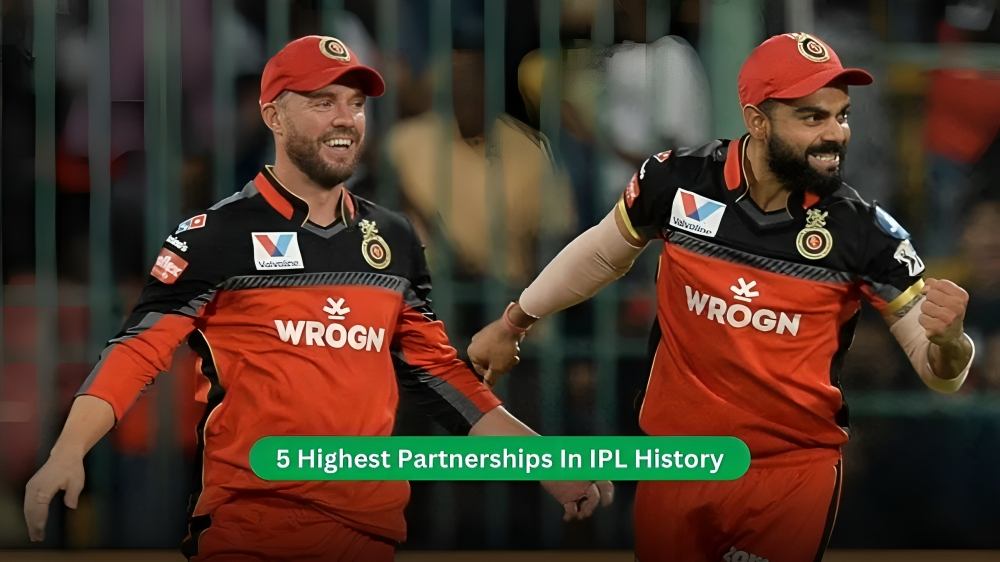
These are the top 5 highest partnerships in IPL history, showcasing incredible teamwork and batting prowess that set records and helped their teams achieve remarkable victories in the tournament. 5. Shaun Marsh & Adam Gilchrist Shaun Marsh and Adam Gilchrist formed one of the top 5 highest partnerships in IPL history, putting on 206 runs for the 2nd wicket on May 17, 2011. Playing for Kings XI Punjab against Royal Challengers Bangalore, Gilchrist scored 106 runs at Dharamsala. 4. Shubman Gill & B Sai Sudharsan In IPL 2024, Shubman Gill and B Sai Sudharsan set a remarkable record against CSK, scoring centuries and matching the highest opening partnership of 210 runs in Ahmedabad. Despite their stellar performance, CSK fell short in chasing down the target of 232 runs. 3. KL Rahul & Quinton de Kock In an IPL 2022 match, KL Rahul and Quinton de Kock set the record for the highest 1st wicket partnership. Playing for LSG against Kolkata Knight Riders at DY Patil Stadium, they put on an unbeaten 210 runs together, showcasing exceptional batting. 2. Virat Kohli & AB de Villiers Virat Kohli and AB de Villiers of RCB hold the second-highest partnership in IPL history, scoring 215 runs together in 2015 against Mumbai Indians at Wankhede. Their remarkable batting performance remains one of the most memorable partnerships in the tournament’s history. 1. Virat Kohli & AB de Villiers On May 14, 2016, Virat Kohli and AB de Villiers of RCB set a record for the highest 2nd-wicket partnership in IPL history. They scored an incredible 229 runs together against Gujarat Lions in Bengaluru. Both players struck centuries, with Kohli scoring 109* and de Villiers 129*, leading RCB to a dominant victory in the match. SL.NO. Partners Runs Wkt Team Opposition 5. Shaun Marsh & Adam Gilchrist 206 2nd KXIP RCB 4. Shubman Gill & B Sai Sudharsan 210 1st GT CSK 3. KL Rahul & Quinton de Kock 210 1st LSG KKR 2. Virat Kohli & AB de Villiers 215 2nd RCB MI 1. Virat Kohli & AB de Villiers 229 2nd RCB GL Welcome to E2Bet! Get ready for fun and exciting gaming adventures!
How Sports Betting Works: A Simple Guide 2025

Sports Betting: Sports betting is one of the most popular forms of gambling worldwide, attracting millions of fans who enjoy the excitement of betting on real-world sporting events. Whether you’re a casual fan or a seasoned bettor, understanding how sports betting works is crucial to making informed decisions and maximizing your chances of success. In this article, we’ll explore the fundamental aspects of sports betting, from understanding odds to placing your first bet. With this simple guide, you’ll be well on your way to understanding how sports betting works and how to get started. 1. What Is Sports Betting? Sports betting involves placing a wager on the outcome of a sporting event. The goal is to predict the result of the game or event and bet money on it. If your prediction is correct, you win the bet and typically receive a payout based on the odds at the time you placed the bet. If your prediction is wrong, you lose the money you wagered. There are various types of bets you can place, ranging from simple bets on who will win a game to more complex wagers on the number of points scored, individual player performances, or even game-specific events. Types of Sports Bets Bet Type Description Moneyline Bet Betting on which team or player will win the game. Point Spread Betting on the margin of victory by which a team will win. Over/Under (Total) Betting on whether the total points scored by both teams will go over or under a specific number. Parlay Combining multiple bets into one for higher payouts, but higher risk. Futures Betting on the outcome of a season or tournament (e.g., who will win the championship). Prop Bets Betting on specific outcomes within a game, such as player performance or specific events. 2. Understanding Odds In Sports Betting One of the most important aspects of sports betting is understanding odds, as they determine how much you can win and how likely the outcome is. Odds are typically displayed in three formats: American (Moneyline), Decimal, and Fractional. American Odds (Moneyline): This format uses a plus (+) or minus (-) sign to indicate the odds. A positive number indicates how much you would win on a $100 bet, while a negative number shows how much you need to bet to win $100. Decimal Odds: This format is commonly used in Europe and Canada. It shows how much you will win per dollar bet, including your stake. For example, decimal odds of 2.00 means you will win $2 for every $1 bet, including your original stake. Fractional Odds: Often used in the UK, fractional odds show how much you will win relative to your stake. For example, 5/1 odds mean that for every $1 you bet, you will win $5 in profit (plus your original stake). Odds Formats Comparison Format Example Meaning American (Moneyline) +200 Bet $100 to win $200 (plus your initial stake). -150 Bet $150 to win $100 (plus your initial stake). Decimal 3.50 Bet $1 to win $3.50 (including your original stake). Fractional 5/1 Bet $1 to win $5 in profit (plus your initial stake). 3. Placing Your First Bet Placing a sports bet is a straightforward process once you understand the basic components. Here’s how it works step by step: Step 1: Choose a Sportsbook A sportsbook is an establishment (physical or online) where you can place sports bets. In some countries, sportsbooks are regulated and operate legally, while in others, they may only exist online or in specific regions. Step 2: Select a Sport or Event Once you’ve chosen a sportsbook, you can browse through a list of available sports and upcoming events. Most sportsbooks will feature major sports like football, basketball, baseball, and soccer, but many also offer options for niche sports like tennis, golf, and esports. Step 3: Choose a Bet Type After selecting your sport, you’ll need to choose the type of bet you want to place. This could be a moneyline bet on who will win, a point spread bet on how much a team will win by, or any other available bet type. Step 4: Set Your Stake Once you’ve chosen your bet, the next step is to decide how much money you want to wager. Most sportsbooks will display the potential payout based on your stake and the odds. Step 5: Confirm Your Bet After selecting your stake and reviewing the details, you’ll need to confirm your bet. Once confirmed, the bet is locked in, and you can watch the event unfold to see if your prediction comes true. Example of Placing a Bet Step Action Example Step 1: Choose a Sport Select the sport you want to bet on. NFL Football Step 2: Choose Bet Type Choose the type of bet (e.g., Moneyline, Point Spread). Moneyline Bet on Team A to win. Step 3: Set Stake Enter the amount of money you want to wager. $50 bet Step 4: Confirm Bet Review and confirm the bet. Bet placed on Team A with odds of -150. 4. Types Of Sports Bets Explained Now that you know how to place a bet, let’s dive deeper into some of the most common types of bets you’ll encounter. Moneyline Bets This is the simplest form of sports betting. In a moneyline bet, you simply pick the winner of the event. The odds for each team or player will vary, with favorites having negative odds (e.g., -150) and underdogs having positive odds (e.g., +200). Point Spread Bets Point spread betting is a bit more complex. In this type of bet, the sportsbook sets a spread (a number) to even out the betting between two teams. The favorite must win by more than the point spread, while the underdog can either win outright or lose by fewer points than the spread. Example: Over/Under Bets An over/under bet, also known as a total bet, involves betting on the total number of points scored in a game by both teams combined. The
Controversial Behavior: Pakistan Cricketers With A Reputation For Bad Manners 2025

Cricket is more than just a sport in Pakistan; it is a national obsession. Over the decades, Pakistani cricketers have captured the imagination of fans with their extraordinary talent and passion for the game. However, alongside their sporting achievements, some players have garnered a reputation for controversial behavior and questionable manners on and off the field. While their skills cannot be denied, their antics have often led to criticism and disciplinary action. This article delves into the controversial behavior of some Pakistan cricketers, offering an objective look at incidents that have marred their otherwise illustrious careers. The Role Of Aggression In Cricket Cricket, despite being labeled as a “gentleman’s game,” often sees players displaying aggression, particularly in high-stakes matches. For some Pakistani cricketers, this aggression has crossed the line, leading to confrontations with opponents, umpires, and even teammates. A combination of pressure, national pride, and personal temperament has often resulted in heated moments. Controversial Players And Incidents Player Name Notable Controversy Outcome Shahid Afridi Ball tampering incident in 2010 Fined and suspended for two T20 matches Shoaib Akhtar Physical altercation with Mohammad Asif in 2007 Sent home from T20 World Cup squad Umar Akmal Repeated disciplinary issues, including a leaked video rant Banned for three years (later reduced) Sarfaraz Ahmed Racial comment during an ODI against South Africa in 2019 Suspended for four matches Javed Miandad On-field spat with Dennis Lillee in 1981 Criticized for unsportsmanlike behavior Waqar Younis Ball tampering allegations in 2000 Fined 50% of match fee Mohammad Amir Spot-fixing scandal in 2010 Five-year ban and imprisonment Shahid Afridi: The Eccentric Star Shahid Afridi, also known as “Boom Boom Afridi,” is one of the most iconic cricketers in Pakistan’s history. However, his career has not been without controversy. In 2010, Afridi was caught on camera biting the ball during an ODI against Australia, an act of blatant ball tampering. Afridi later justified his actions by saying he was trying to “smell the ball.” This incident led to widespread criticism and a two-match suspension. Despite this, Afridi’s charisma and match-winning performances have often overshadowed his controversial moments. Shoaib Akhtar: The Rawalpindi Express Known for his fiery pace and equally fiery temperament, Shoaib Akhtar has been involved in numerous controversies throughout his career. One of the most infamous incidents occurred in 2007 when he was sent home from the inaugural T20 World Cup after physically assaulting teammate Mohammad Asif with a bat. Akhtar’s aggressive personality often clashed with team management, leading to suspensions and fines. Despite his controversies, Akhtar’s record-breaking speed and match-winning spells have secured his place as one of the most exciting fast bowlers in cricket history. Umar Akmal: The Troubled Talent Umar Akmal’s career is a textbook case of wasted potential. The younger Akmal brother burst onto the international scene with immense talent but soon became known more for his off-field antics than his cricketing exploits. From altercations with coaches to unprofessional conduct during training sessions, Umar Akmal’s disciplinary issues have been a constant problem. In 2020, he was banned for failing to report approaches by bookies, a ban that was initially set at three years but later reduced to 12 months. Umar remains a polarizing figure in Pakistani cricket. Sarfaraz Ahmed: Crossing The Line Sarfaraz Ahmed, who led Pakistan to its first ICC Champions Trophy victory in 2017, faced a major backlash in 2019 for making a racial comment directed at South African player Andile Phehlukwayo during an ODI. The comment, caught on the stump microphone, led to Sarfaraz being suspended for four matches and issuing a public apology. While Sarfaraz is generally regarded as a humble and hardworking player, this incident tarnished his reputation to some extent. Factors Contributing To Controversial Behavior Several factors contribute to the controversial behavior of cricketers: Pressure to Perform: The expectations from fans and media can sometimes lead players to act impulsively. Cultural and Temperamental Differences: Aggression is often seen as a means to assert dominance, but it can sometimes be misdirected. Lack of Professional Guidance: Poor management and lack of proper mentorship have also been cited as reasons for some players’ behavior. Media Scrutiny: With the rise of social media, every action is amplified, often blowing minor incidents out of proportion. The Impact Of Controversies On Pakistani Cricket The controversies surrounding Pakistani cricketers have had both positive and negative impacts: Impact Description Negative Damaged the image of Pakistani cricket on the global stage. Positive Raised awareness about the need for better player management and stricter disciplinary measures. Mixed Generated media attention, sometimes drawing more viewers and fans to the sport. Steps Taken To Improve Discipline The Pakistan Cricket Board (PCB) has taken several measures to address behavioral issues among players: Code of Conduct: Implementing strict rules and penalties for misconduct. Education Programs: Conducting workshops on professionalism and ethical behavior. Psychological Support: Offering mental health support to help players manage stress and aggression. Leadership Roles: Appointing experienced players as mentors to guide younger talent. While Pakistani cricketers’ controversial behavior has often been a talking point, it is essential to view these incidents in context. These players are human, prone to mistakes, and operate under immense pressure. Efforts by the PCB to instill discipline and professionalism have shown promise, but there is still work to be done. Ultimately, the goal should be to channel their aggression and passion into performances that inspire fans and uphold the spirit of the game. The legacy of Pakistan cricket is built on a blend of brilliance and chaos. If managed effectively, these moments of controversy can serve as lessons, paving the way for a more professional and respectful generation of cricketers. E2BET: Welcome! Discover Endless Betting Possibilities!
IPL 2025: Who Inspired The IPL Logo?
The Indian Premier League (IPL) is not just a cricket tournament; it’s a global phenomenon. Since its inception in 2008, the IPL has captured the imagination of millions, blending cricket with entertainment, glamour, and business. Among the many elements that contribute to its identity, the IPL logo stands out as an iconic symbol of the league’s brand. But who or what inspired the IPL logo, and how was it designed to encapsulate the spirit of this revolutionary tournament? Let’s dive deep into the story behind the IPL logo. The Evolution Of The IPL Logo The IPL logo, with its dynamic depiction of a batsman in action, represents the essence of the game: energy, skill, and entertainment. Its design reflects not only the competitive spirit of the league but also its innovative and inclusive approach to cricket. To understand the inspiration behind the IPL, let’s explore its elements: Logo Element Description Symbolism Batsman Silhouette A player in mid-swing with a bat raised high. The excitement and dynamism of cricket. Curved Strokes Flowing lines that form the base of the design. Energy, motion, and fluidity. Blue and Gold Colors Blue for trust and stability; gold for prestige and glamour. Represents the league’s values and stature. Typography Bold, modern font for “IPL.” Professionalism and modernity. Inspiration Behind The Logo The logo is believed to have drawn inspiration from multiple sources, combining elements of: 1. Cricket Itself The primary inspiration for the IPL logo comes from the game of cricket. The silhouette of a batsman symbolizes the central role of players in the league. The batsman’s pose, mid-swing, highlights the action-packed nature of the tournament, where every shot and delivery matters. 2. The Global Sports Landscape The IPL took cues from other global sports leagues like the NBA (National Basketball Association) and the EPL (English Premier League). These leagues have distinct logos that embody their brand values, and the IPL’s creators aimed to achieve a similar level of recognition. The dynamic design of the batsman is reminiscent of the iconic NBA logo’s player silhouette. 3. Indian Culture and Festivity India’s vibrant culture and love for cricket play a significant role in the logo’s design. The curved strokes evoke a sense of celebration and movement, much like the festive atmosphere that surrounds IPL matches. 4. Innovation and Entertainment The IPL’s identity as a fusion of cricket and entertainment is reflected in this. The modern typography and energetic design represent the league’s innovative approach and its appeal to younger audiences. The Process Behind The Design The Indian Premier League logo was designed under the guidance of the Board of Control for Cricket in India (BCCI) and a team of branding experts. The process involved: Understanding the Brand Identity: The designers first analyzed what the Indian Premier League represented: a mix of cricket, entertainment, and business. They aimed to create a logo that resonated with fans and stakeholders alike. Sketching Initial Concepts: Early drafts of the logo included various depictions of cricketing actions, such as batting, bowling, and fielding. The batsman silhouette was ultimately chosen for its universal appeal and connection to cricket fans. Finalizing the Design: After multiple iterations, the design was finalized with input from the BCCI and IPL stakeholders. The chosen color scheme, fonts, and overall layout were carefully curated to align with the league’s vision. How The Indian Premier League Logo Compares To Other Cricket League Logos To understand the uniqueness of the IPL logo, let’s compare it with the logos of other popular cricket leagues: League Logo Description Key Features IPL Batsman silhouette, blue and gold colors, bold font. Dynamic, celebratory, cricket-focused. Big Bash League (BBL) Shield-shaped logo with bold letters “BBL.” Simplistic, modern, shield symbolizes strength. Pakistan Super League (PSL) Green color palette with a cricketer in action. Emphasizes national identity and cricketing spirit. Caribbean Premier League (CPL) Multicolored design with a carnival vibe. Represents the festive culture of the Caribbean. The Indian Premier League logo stands out due to its combination of elegance and energy, striking a balance between professionalism and excitement. The Role Of The IPL Logo In Brand Building The Indian Premier League logo has been instrumental in establishing the league’s brand identity. Its impact can be seen in: Global Recognition The logo is instantly recognizable, even among casual cricket fans. It has become a symbol of the IPL’s global appeal and stature. Merchandising The IPL logo is prominently featured on merchandise like jerseys, caps, and accessories, contributing significantly to the league’s revenue. Fan Engagement The logo’s dynamic design resonates with fans, making it a popular feature in social media campaigns, advertisements, and promotional events. Fun Facts About The IPL Logo Hidden Symbolism: The curved strokes below the batsman can also be interpreted as a cricket ball’s trajectory, adding depth to the design. Initial Reception: When the logo was unveiled in 2008, it received widespread praise for its modern and energetic look. Logo Evolution: While the core design has remained the same, minor tweaks have been made over the years to keep it fresh and relevant. The Future Of The Indian Premier League Logo As the Indian Premier League continues to grow, the logo is likely to evolve to reflect the league’s changing dynamics. However, the core elements that make it iconic—the batsman, the energy, and the celebration of cricket—will remain integral to its design. The Indian Premier League logo is much more than a design; it’s a symbol of cricketing excellence, entertainment, and global appeal. Inspired by cricket, global sports branding, and India’s cultural vibrancy, the logo captures the essence of the IPL perfectly. As the league scales new heights, the logo will continue to be a beacon of its identity, cherished by fans worldwide. E2BET: Welcome! Discover Endless Betting Possibilities!
3 Worst Bowling Spells In IPL History
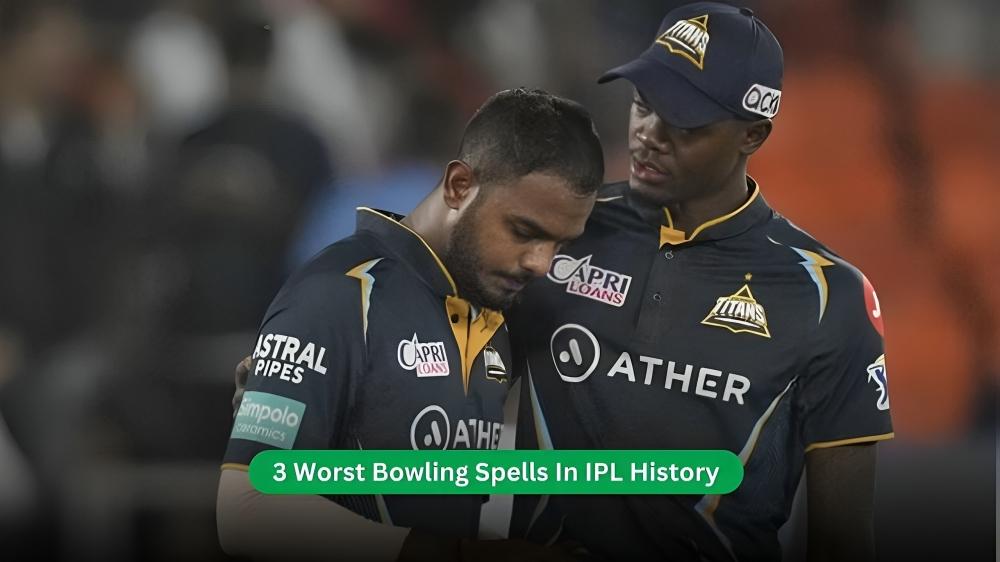
The 3 worst bowling spells in IPL history feature bowlers who struggled under intense pressure. One bowler conceded 66 runs in 2013, another leaked 28 runs in five balls during a 2023 match, and a third gave away 70 runs in just four overs in 2018. These spells became unforgettable for their excessive run-leakage against dominant batting line-ups. 3. Ishant Sharma (SRH) 0/66 vs CSK, 2013 In IPL 2013, veteran Indian pacer Ishant Sharma delivered one of the most expensive spells in the tournament’s history during a match between SRH and CSK in Hyderabad. Bowling against a rampant Suresh Raina and Michael Hussey, Ishant leaked 66 runs in his four overs at a staggering economy of 16.5. Raina smashed an unbeaten 99, while Hussey contributed 67, dominating Ishant throughout. Playing under MS Dhoni for the national team, Ishant struggled to find rhythm that night, marking a low point in his IPL career with this costly performance. 2. Yash Dayal (GT) 0/69 vs KKR, 2023 In the 2023 Indian League, Gujarat Titans’ left-arm seamer Yash Dayal had a nightmare match against KKR in Ahmedabad. After conceding 38 runs in his first three overs, his final over turned disastrous. With 28 runs required off the last 5 balls, Rinku Singh hammered Dayal for five consecutive sixes, sealing an unforgettable victory for KKR and marking a low point in Dayal’s bowling career. This performance stands out as one of the most costly overs in league history. 1. Basil Thampi (SRH) 0/70 vs RCB, 2018 Former SRH speedster Basil Thampi holds the record for the most expensive bowling spell in IPL history, conceding 70 runs against RCB in 2018. Thampi struggled in the batting-friendly conditions of the M. Chinnaswamy Stadium, facing a dominant RCB lineup led by AB de Villiers and Moeen Ali, with quick cameos from De Grandhomme and Sarfraz Khan. As RCB piled up 218 runs, Thampi’s costly spell of 4 overs became a memorable low point in the league’s history. E2BET: Welcome! Discover Endless Betting Possibilities!