

Which Match Has The Lowest Score In The Big Bash League 2025?
Score: The Big Bash League (BBL) has become one of the premier T20 leagues in the world, showcasing exciting cricket, memorable performances, and high-scoring encounters. From explosive batting displays to stunning bowling performances, the league has produced numerous thrilling matches. However, not every game in the competition has been filled with fireworks. In fact, some matches have been marked by remarkably low scores, especially when the batting collapses in dramatic fashion. Among these, there is one match in particular that stands out as having the lowest score in Big Bash League history. This article will take a deep dive into the match, discuss the circumstances around the low score, and explore the factors that led to such an outcome. The Lowest Score in BBL History The lowest score in Big Bash League history was set in the 2015-16 BBL season, during a match between the Melbourne Renegades and the Sydney Thunder. This encounter remains one of the most talked-about games in BBL history due to the sheer dramatic nature of the game and the incredible collapse that led to the Renegades’ dismal performance. The Match: Melbourne Renegades vs. Sydney Thunder (2015-16) The match took place on January 14, 2016, at the Melbourne Cricket Ground (MCG), one of the biggest stadiums in the world. Both teams were part of the BBL’s original lineup, and the game was expected to be competitive given the quality of players in both teams. However, what transpired on that day would shock everyone. The Melbourne Renegades, known for having strong batting line-ups, found themselves bowled out for a mere 57 runs, which is still the lowest score ever recorded in the BBL. Match Breakdown: Melbourne Renegades’ Batting Collapse Team Innings Runs Wickets Overs Faced Highest Score Melbourne Renegades 1st innings 57 10 15.5 Marcus Harris – 14 Sydney Thunder 2nd innings 58 3 13.4 Shane Watson – 34 The Renegades’ Batting Performance The Renegades’ batting performance was nothing short of a disaster. After winning the toss, they chose to bat first, but from the very beginning, they were put under immense pressure by the Sydney Thunder bowlers. Early Wickets: The Renegades lost their opening wickets quickly, with their top order failing to handle the swinging conditions. Star players like Aaron Finch, Matthew Wade, and Ben Dunk were dismissed cheaply, and the middle order failed to recover. Bowlers in Control: The Thunder’s bowling attack, led by Shane Watson and Andrew Tye, dominated the match. They used the conditions to their advantage, making full use of the MCG’s pitch, which had some movement early on. The Thunder bowlers maintained a tight line and length, reducing the Renegades’ batting line-up to rubble. Key Contributions: The highest score for the Renegades came from Marcus Harris, who managed just 14 runs. Apart from him, no other batsman reached double figures, and the Renegades were bowled out for 57 runs in just 15.5 overs. Sydney Thunder’s Quick Chase In response to the Renegades’ paltry total of 57, the Sydney Thunder needed just 58 runs to win. While the chase seemed straightforward, the Thunder also faced a few hiccups on the way, losing three wickets during the chase. Shane Watson’s Impact: The experienced all-rounder Shane Watson top-scored for the Thunder, contributing 34 runs from 23 balls. Watson’s steady batting anchored the chase and helped the Thunder get closer to the target. Thunder’s Chase: Despite losing three wickets, the Thunder crossed the finish line with ease, reaching 58/3 in just 13.4 overs. This quick chase completed one of the most unexpected games in BBL history. Factors Leading To The Lowest Score Several factors contributed to the Melbourne Renegades’ shocking collapse, and it’s worth analyzing them in detail to understand why such a low score was registered. 1. Brilliant Bowling by Sydney Thunder The Sydney Thunder bowlers were in impeccable form during this match. Shane Watson and Andrew Tye spearheaded the attack, with the former taking 3 wickets for 14 runs and the latter claiming 3 wickets for 16 runs. Their ability to extract movement from the pitch, especially during the early stages of the innings, created immense pressure on the Renegades’ batsmen. Shane Watson was particularly brilliant, bowling with precision and discipline. His experience in both domestic and international cricket allowed him to outthink the Renegades’ batsmen. Andrew Tye used his variations effectively, including his deadly yorkers and slower balls, to cause confusion in the Renegades’ batting order. 2. Poor Batting by the Renegades On the flip side, the Melbourne Renegades’ batting simply fell apart. While the Thunder bowlers were excellent, the Renegades’ batsmen also failed to adapt to the conditions. The pitch had some bounce and swing, which troubled the Renegades throughout their innings. Inability to Build Partnerships: The Renegades had no significant partnerships, with wickets falling at regular intervals. The collapse was swift, and none of the batsmen managed to stabilize the innings or build any resistance against the Thunder bowlers. Pressure of Big Games: The Renegades’ batting line-up, which included some big names, was unable to handle the pressure of a high-stakes match. Big players like Aaron Finch, Matthew Wade, and Ben Dunk could not adapt to the challenging conditions, leading to their untimely dismissals. 3. Tactical Mistakes and Mental Errors It is also fair to say that there were some tactical errors and mental mistakes that contributed to the Renegades’ downfall: Impact Of The Match: A Defining Moment In BBL History This match remains one of the most talked-about games in the history of the Big Bash League. It showcased how a combination of exceptional bowling and poor batting could result in a shocking low score. While the Thunder’s victory was clinical, the Renegades’ collapse was a cautionary tale about how fragile a batting line-up can be in T20 cricket. 1. Psychological Impact For the Renegades, this defeat had a psychological impact. Despite the low score, they went on to bounce back in future seasons, but the 2015-16 season remains a painful memory. On the other hand, for the
BBL: How Are Players Selected in the Big Bash League?

The Big Bash League (BBL) is one of the most popular T20 cricket leagues in the world, known for its exciting matches, thrilling atmosphere, and emphasis on domestic Australian talent. The selection process for players in the BBL is a detailed and well-structured system that ensures a mix of local and international talent for each team. This process involves a combination of drafts, auctions, and player retainment systems, with a focus on creating balanced and competitive teams. In this article, we will explore how players are selected for the Big Bash League, covering the various stages, criteria, and systems used for player recruitment, as well as the role of domestic and international players in the tournament. 1. Overview of the Selection Process The player selection process in the BBL is designed to ensure that teams are competitive and balanced, with a mix of experienced international stars, Australian domestic players, and emerging talents. Teams must adhere to a salary cap, and various rules dictate how players are chosen and contracted for the season. The key components of the player selection process include: 2. Player Draft and Signings The player draft system is the cornerstone of how teams in the Big Bash League select players, particularly for the incoming season. While the IPL has its famous auction, the BBL operates with a draft system where franchises select players based on their needs and budget. Key Features of the Draft: Draft Example Here is an illustrative example of how the draft could work in the BBL: Round Player Type Player Role Team Selection 1 International Player Top-order Batsman Sydney Sixers 2 Domestic Player All-rounder Melbourne Stars 3 International Player Spin Bowler Brisbane Heat 4 Domestic Player Fast Bowler Perth Scorchers 5 International Player Wicketkeeper/Batsman Adelaide Strikers In this example, the teams select players based on their needs and team composition. International players are often selected in the earlier rounds, while domestic players may be chosen later in the draft. 3. Player Retention Another key aspect of the BBL selection process is player retention. Each team can choose to retain a certain number of players from the previous season. This system allows teams to maintain consistency in their lineups and continue building team chemistry. Retention Rules: Example of Retained Players: Player Team Role Retention Status Glenn Maxwell Melbourne Stars All-rounder Retained Chris Lynn Brisbane Heat Opening Batsman Retained Josh Philippe Sydney Sixers Wicketkeeper-Batsman Retained Nathan Lyon Adelaide Strikers Spinner Retained 4. Domestic and International Players The Big Bash League strikes a balance between domestic Australian talent and international players, creating a competitive environment for both. Domestic Players: Domestic players are cricketers who are part of Australia’s state cricket system. These players often play for local teams and have extensive experience in Australia’s domestic tournaments, such as the Sheffield Shield or the One-Day Cup. International Players: International players, on the other hand, add global flair to the tournament. These players are typically highly experienced T20 specialists who bring a wealth of knowledge to the league. International players in the BBL are often selected based on their form in global T20 leagues like the Indian Premier League (IPL), Caribbean Premier League (CPL), and Pakistan Super League (PSL). 5. Contract Types in the BBL The BBL offers different types of contracts to players, which vary in terms of duration and monetary value. Types of Contracts: Contract Type Description Typical Salary Range Full Contract Guaranteed spot in the team for the season. $100,000–$200,000 Replacement Contract Replaces an injured or unavailable player. Varies, typically lower Development Contract Given to emerging players for development. $50,000–$80,000 6. Conclusion The player selection process in the Big Bash League (BBL) is a well-organized and competitive system that ensures teams have the right mix of domestic talent, international stars, and emerging players. Through a structured draft system, player retention rules, and a salary cap, the BBL ensures fairness and balance across the competition. The inclusion of both local and international players is one of the key factors that make the BBL exciting for fans. With a focus on developing Australian cricket talent and attracting top-tier international players, the Big Bash League continues to grow as a major global T20 competition. Welcome to E2Bet, here for you to enjoy playing fun and exciting games:
BBL: Structure of a Big Bash League (BBL) Squad

The Big Bash League (BBL) is one of Australia’s premier domestic T20 competitions, and like any major cricket league, it follows a structured approach when it comes to squad formation. The BBL squad consists of a mix of domestic and international players, providing teams with a blend of talent, experience, and power. In this article, we will explore how many players are typically in a BBL squad, the structure of the squad, and the rules governing player selection. This includes the total number of players, the inclusion of international players, the role of the marquee players, and the guidelines surrounding injuries and replacements. How Many Players are in a BBL Squad? The standard number of players in a BBL squad has evolved over time, depending on the league’s regulations and team strategies. As of the 2023-24 season, each team is allowed a maximum of 18 players in their squad. This includes both domestic and international players. Here’s a breakdown of the structure: Category Total Players Total Squad Size 18 Players Domestic Players 12 Players International Players 6 Players Key Guidelines for Squad Composition The BBL squad composition is governed by several key rules, which aim to maintain a balance of domestic and international players and ensure that the league showcases the best of Australian talent, while also allowing international stars to participate. 1. Domestic Players (12 Players) 2. International Players (6 Players) 3. Marquee Players 4. Injury and Replacement Players Table: BBL Squad Structure Overview Category Domestic Players International Players Total Players Number Allowed 12 6 18 Max. in Playing XI 11 3 (International) 11 Marquee Players 1-2 (Domestic or International) 1-2 (International) 1-2 per team Replacement Players Available as needed Available as needed As needed Additional Squad Considerations Changes and Flexibility in Squad Regulations While the squad structure remains relatively constant, the BBL is known for evolving its rules based on feedback and the changing landscape of T20 cricket. The number of international players allowed per team has fluctuated in the past, and changes to marquee player status have been made to further enhance the league’s appeal. Additionally, the introduction of more emerging players and the implementation of the player draft in recent seasons have ensured that the league continues to innovate and improve. Conclusion The BBL squad structure allows for a competitive blend of domestic and international players, ensuring teams are diverse in terms of talent, experience, and global appeal. Teams are allowed a maximum of 18 players, with 12 domestic players and 6 international players, providing a dynamic mix for each franchise to choose from. The introduction of marquee players, flexible injury replacements, and evolving squad rules contributes to the overall growth and excitement of the competition. Welcome to E2Bet, here for you to enjoy playing fun and exciting games:
BBL Teams with the Most Titles
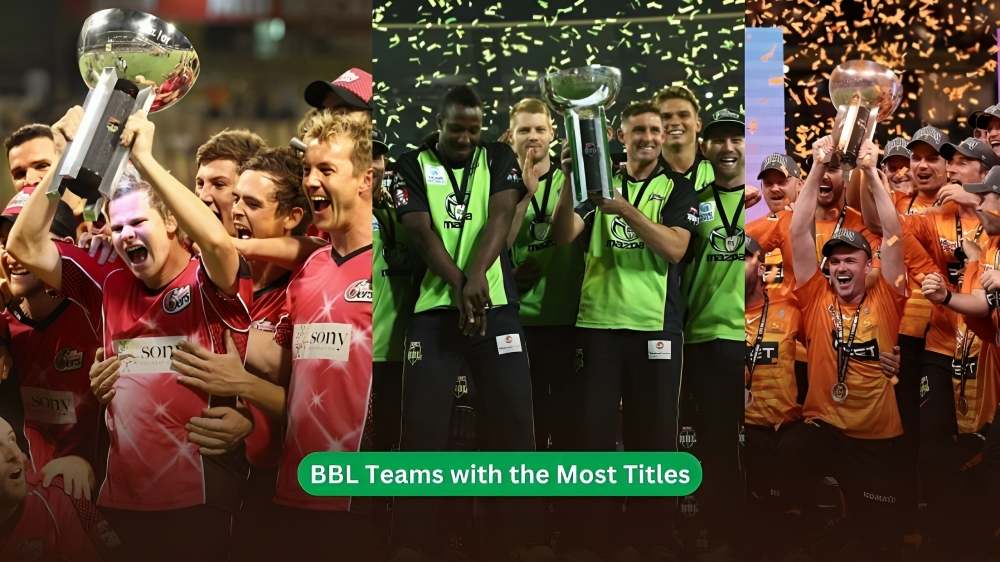
Perth Scorchers dominate the Big Bash League (BBL) with the most titles, showcasing consistent excellence and strong performances. Sydney Sixers follow closely, proving their mettle in high-pressure games. These teams have set benchmarks in BBL history, with their strategic gameplay and star-studded lineups ensuring success across multiple seasons. Their dominance defines the league’s competitive spirit. The Sydney Sixers won the inaugural edition of the Big Bash League (BBL) in 2011/12. The Big Bash League (BBL) is among the world’s most popular T20 cricket leagues, held annually in Australia since its inception in the 2011/12 season with eight participating teams. The Sydney Sixers clinched the inaugural title, defeating the Perth Scorchers in the final. Over the years, six teams have lifted the coveted trophy, while the Hobart Hurricanes and Melbourne Stars remain title-less. In this article, we’ll explore the most successful teams in BBL history and highlight the team with the most championship wins. Here are the teams with most Big Bash League (BBL) titles: 6. Sydney Thunder (1): The Sydney Thunder claimed their maiden BBL title in the 2015-16 season, becoming only the fourth team to win the championship. They triumphed over the Melbourne Stars in a memorable final at the MCG. Led by Mike Hussey, the Thunder defeated a Stars side captained by his brother, David Hussey. Notably, this remains the Thunder’s only BBL final appearance to date. 5. Adelaide Strikers (1) The Adelaide Strikers hold the record for the highest innings total in a BBL final, setting it in the 2017/18 season against the Hobart Hurricanes. Scoring 202/2, the Strikers won their maiden BBL title by 25 runs under the leadership of Travis Head. Since then, they have not featured in any other BBL finals. BBL title won in: 2017/18. 4. Melbourne Renegades (1) The Melbourne Renegades have been considered one of the underperforming teams in BBL history. Their only BBL final appearance came in the 2018-19 season, where they clinched their maiden title by defeating Melbourne Stars under the captaincy of Aaron Finch. Since then, the Renegades have had little to celebrate in their BBL journey. BBL Title: 2018/19. 3. Brisbane Heat (2) The Brisbane Heat became only the second team to win the Big Bash League (BBL) title, claiming their first championship in the 2012-13 season with a 34-run victory over Perth Scorchers in the final. Chris Hartley led the team to their maiden BBL triumph. They secured their second title in the 2023-24 season, defeating Sydney Sixers by 54 runs in a one-sided final at the SCG on January 24, 2024. Brisbane Heat’s BBL titles: 2012–13, 2023–24. 2. Sydney Sixers (3) The Sydney Sixers are the second-most successful team in Big Bash League history. They claimed the inaugural BBL title in 2011-12, defeating Perth Scorchers in the final under Steve Smith’s leadership. Moises Henriques then guided the team to back-to-back titles in 2019-20 and 2020-21, overcoming Melbourne Stars and Perth Scorchers. Alongside their three championships, the Sixers have finished as runners-up three times. BBL titles won: 2011-12, 2019-20, and 2020-21. 1. Perth Scorchers (5) The Perth Scorchers are the most successful team in Big Bash League (BBL) history. After finishing as runners-up in the first two editions, they clinched their maiden title in 2013–14 under Simon Katich. This was followed by another victory in 2014–15, led by Adam Voges. The Scorchers won their third title in 2016–17, again under Voges, before Ashton Turner guided them to back-to-back wins in 2021–22 and 2022–23. BBL titles won: 2013–14, 2014–15, 2016–17, 2021–22, and 2022–23. Welcome to E2Bet! Dive into the excitement of thrilling games!