

Sri Lanka Announces Squad for Second Test Against Bangladesh
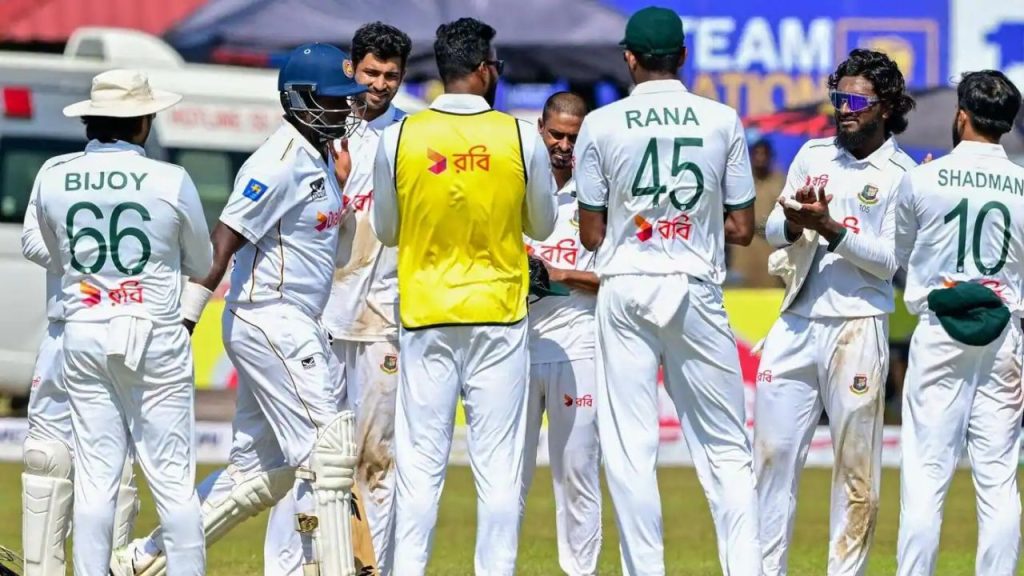
The second Test between Sri Lanka and Bangladesh will take place at the Sinhalese Sports Club in Colombo. Sri Lanka Cricket has announced their squad for the second Test against Bangladesh. This match will conclude the Test series and is scheduled to begin on Wednesday, June 25, at the Sinhalese Sports Club, Colombo. Dhananjaya de Silva will continue as captain for the series-deciding Test. The team will be without Angelo Mathews, who retired from Test cricket following the first match against Bangladesh. Mathews concluded a distinguished 17-year career from 2009 to 2025, having played 119 Tests for Sri Lanka. Both Asian teams began their campaign in the ICC World Test Championship (WTC) 2025-27 with this two-match series. With the first Test ending in a draw, the winner of the second Test will secure the series victory. In the opening Test, Bangladesh impressed with a strong batting performance after choosing to bat first. Captain Najmul Hossain Shanto scored 148, and Mushfiqur Rahim contributed 163, helping Bangladesh post 495 runs in their first innings. Litton Das also played a significant innings, scoring 90 runs. Sri Lanka responded well with an excellent century from opener Pathum Nissanka, who scored 187, supported by half-centuries from Kamindu Mendis (87) and Dinesh Chandimal (54). Despite Nayeem Hasan’s five-wicket haul, Sri Lanka managed 485 runs in their first innings. In the second innings, Bangladesh declared at 285 for 6, anchored by another century from skipper Shanto (125*), setting a target of 296 runs. However, with only 32 overs bowled on the final day, the match ended in a draw, with Sri Lanka at 72 for 4 when the stumps were drawn on day five. Sri Lanka Squad for Second Test Against Bangladesh Sri Lanka has announced their squad for the second Test against Bangladesh, led by captain Dhananjaya De Silva. The team includes Pathum Nissanka, Oshada Fernando, Lahiru Udara, Dinesh Chandimal, Kusal Mendis, Kamindu Mendis, Pasindu Sooriyabandara, Sonal Dinusha, Pavan Rathnayake, Dunith Wellalage, Prabath Jayasuriya, Tharindu Ratnayake, Akila Dananjaya, Asitha Fernando, Vishwa Fernando, Kasun Rajitha, and Isitha Wijesundara. Following the Test series, the Bangladesh tour of Sri Lanka in 2025 will continue with a three-match ODI series and a three-match T20I series. Sign Up Fast For E2bet And Enjoy A Free Bonus On Your First Registration
What Was The Worst Cricket Match In Terms Of Quality 2025?
Worst Cricket Match: Cricket, often referred to as a game of skill, strategy, and grit, is celebrated for its competitive edge, thrilling moments, and outstanding performances. However, like any other sport, there have been instances where the quality of a match has been less than ideal. Poor-quality cricket matches can arise from various factors, including weather conditions, unprepared pitches, controversial umpiring decisions, and even questionable player performances. Worst Cricket Match: In this article, we will explore some of the worst cricket matches in terms of quality, examining the reasons behind their poor standard and the impact they had on the sport. We will also include a detailed analysis of specific matches where factors such as unbalanced teams, awful pitch conditions, or low-quality cricket led to underwhelming contests. Factors That Contribute To Poor-Quality Matches Worst Cricket Match: Before diving into specific examples, let’s first look at some of the reasons that contribute to cricket matches of low quality: Poor Pitch Conditions: One of the most significant factors in determining the quality of a cricket match is the condition of the pitch. A pitch that is too flat, too dry, or overly wet can lead to unexciting cricket. For example, a flat pitch can result in a high-scoring game, but with minimal excitement if the bowlers cannot get any assistance from it. Conversely, a pitch with excessive turn or bounce may favor only one type of player, rendering the contest lopsided. Weather Interference: Bad weather, such as rain or extreme heat, can cause disruptions, delay matches, or even reduce the number of overs. In some cases, the weather can make conditions unplayable, leading to subpar cricket or abandoned games. Unbalanced Teams: Matches that feature a significant skill disparity between the two teams often result in one-sided encounters, which diminish the quality of the competition. When one team is heavily outclassed by the other, the match lacks the excitement of a competitive contest. Controversial Umpiring Decisions: Incorrect or biased umpiring decisions can often mar a match, especially when crucial decisions affect the outcome of a game. When the quality of decision-making is poor, it can lead to frustration, controversy, and a sense that the match was unfair. Player Injuries and Inexperience: The absence of key players or the involvement of inexperienced or out-of-form cricketers can lead to low-quality cricket. Injuries can alter the balance of the team, and inexperience often leads to unrefined play. Low Team Morale: A team with poor morale, possibly due to internal issues or poor performances, may not perform to the best of its ability, leading to a match lacking in quality. The Worst Cricket Matches In Terms Of Quality Worst Cricket Match: Now that we’ve identified the factors that affect the quality of a cricket match, let’s examine a few examples of matches that are considered to be among the worst in terms of quality. 1. The 1996 World Cup Quarterfinal: Sri Lanka vs. England (Colombo) Worst Cricket Match: One of the most infamous matches in cricket history in terms of quality was the 1996 World Cup quarterfinal between Sri Lanka and England in Colombo. The match was marred by controversial circumstances and weather disruptions. Key Issues: Rain Interruption: The match was repeatedly interrupted by rain, with Sri Lanka batting first and struggling due to the weather. This led to a reduced number of overs for both sides. The Controversial “No Result”: England, having been set a revised target by the umpires, felt that they were at a disadvantage, and the match eventually ended in a no result. There were accusations that the conditions were unfair and not conducive to a good game of cricket. Impact: This match is often remembered not for the cricket played but for the external factors that ruined what could have been an exciting contest. The poor weather conditions left both teams at a disadvantage, and the lack of clear decision-making by the officials led to widespread disappointment. 2. Australia vs. South Africa, 2006 (The ‘Underarm’ Incident) Worst Cricket Match: While not a conventional match, the infamous “underarm” incident during the 1981 series between Australia and New Zealand remains one of the most controversial and low-quality moments in cricket history. However, another match in 2006 between Australia and South Africa also stands as an example of poor-quality cricket due to shocking umpiring decisions. Key Issues: Inconsistent Umpiring: The match was plagued by bizarre decisions, including wrongly disallowed wickets and incorrect no-ball calls. One of the more notable mistakes was when a crucial delivery by a South African bowler was incorrectly called a no-ball by the on-field umpires, leading to confusion and frustration from players and fans. Match Ends in Controversy: The result of the match came under scrutiny, and it was widely accepted that the poor umpiring overshadowed the cricket. Impact: This match is a textbook example of how poor umpiring decisions can lower the quality of cricket and lead to an unsatisfactory experience for both players and spectators. 3. New Zealand vs. Australia, 2019 ICC World Cup (Boring Encounter) Worst Cricket Match: The 2019 ICC World Cup match between New Zealand and Australia was a one-sided affair that lacked the excitement typically expected from a high-profile game in a World Cup setting. Key Issues: Uncompetitive Contest: Australia’s complete dominance over New Zealand during the match resulted in a low-quality contest. With a high-quality team like Australia dominating, the match felt one-sided from start to finish. Inconsistent Batting: New Zealand, after being bowled out for a low score, struggled to put up a fight against Australia’s bowlers. The match lacked the usual back-and-forth excitement. Impact: Although Australia’s bowling attack was on point, the match lacked any real competition or unpredictable moments. It became a game of domination, leading to many fans questioning the competitive balance in certain World Cup games. Statistical Analysis Of The Worst Matches In Terms Of Quality Worst Cricket Match: To further understand what makes a match low in quality, let’s compare various metrics like team performance, number of